

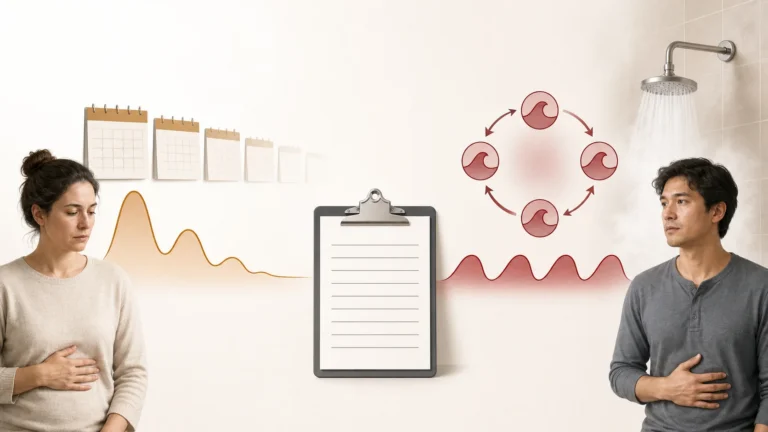
Weed Withdrawal Nausea vs. CHS: How to Tell the Difference
Nausea can occur during cannabis withdrawal or CHS recovery. Timing helps, but severe vomiting and dehydration still require medical evaluation.
Read the guide
Nausea can occur during cannabis withdrawal or CHS recovery. Timing helps, but severe vomiting and dehydration still require medical evaluation.
Read the guide
Sleep disruption and vivid dreams can occur after stopping cannabis. Use a safe sleep plan and know when insomnia needs clinical care.
Read the guide
Cannabis withdrawal follows a variable course. Use safety, function, and symptom trends rather than a rigid day-by-day countdown.
Read the guide
Cannabis withdrawal can affect mood, sleep, appetite, and cravings. Learn the recognized symptoms and which problems need a different evaluation.
Read the guide
Stopping cannabis can be difficult because withdrawal, learned routines, cravings, and the needs cannabis was serving can occur at the same time.
Read the guide
Use a flexible cannabis-cessation timeline based on safety, withdrawal, function, and sustained abstinence rather than fixed promises for each week.
Read the guide
Stopping cannabis after suspected CHS supports diagnostic clarity and recurrence prevention; other benefits vary by the person and prior use.
Read the guide
Greening out is an acute cannabis overconsumption reaction; CHS is a recurring syndrome linked to prolonged exposure. Learn the safety differences.
Read the guide
CHS cannot be separated from everyday nausea by one symptom. Compare recurrence, exposure, abstinence response, and warning signs with a clinician.
Read the guide
Recurring nausea may precede a CHS vomiting episode, but nausea without vomiting is nonspecific and cannot establish CHS by itself.
Read the guide©2026 CHS SOS