


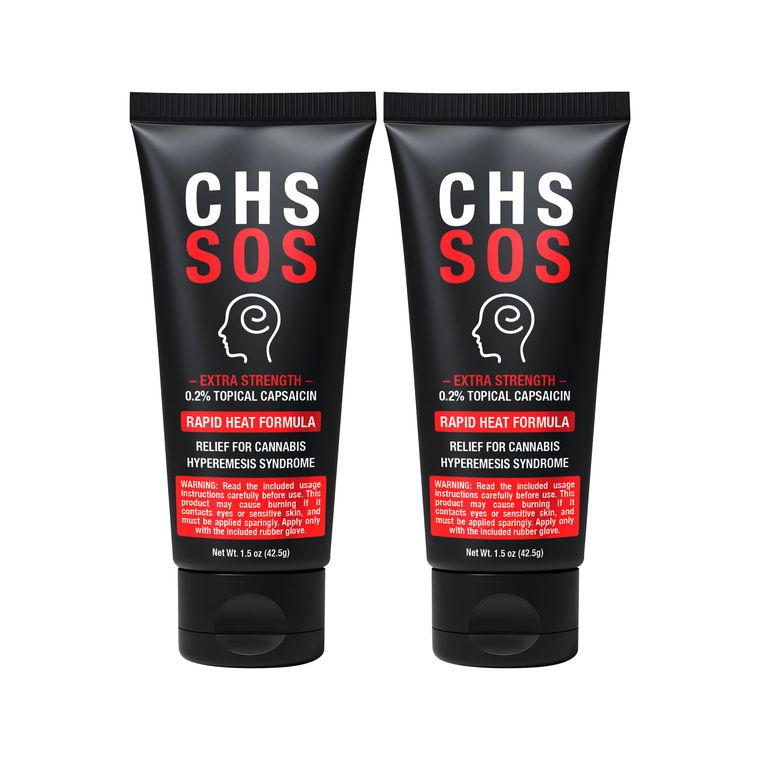

Emergency room visits linked to CHS have risen sharply in recent years, with researchers pointing to increasing THC potency as a likely contributing factor.

When Brittany Ramsey began experiencing what she described as “terrible stomach episodes,” she assumed they were side effects of the medication she was taking to manage her diabetes.
But after a particularly brutal episode, one where she couldn’t keep down even a few sips of water and ended up in the hospital, Ramsey knew something else entirely was going on.
“After that, the episodes kept getting worse and came more frequently,” said Ramsey, a 35-year-old operations trainer at a financial firm in Cincinnati, Ohio. “From 2021 to 2024, three full years, I was hospitalized 29 times. Five ambulance rides, including one that had to pick me up on the side of the road because I couldn’t make it to the hospital on my own.”
After enduring years of diagnostic testing, some of it invasive, to rule out Crohn’s disease, gastroparesis, and diverticulitis, a physician finally brought up cannabinoid hyperemesis syndrome (CHS).

ER visits for CHS on the rise
Over the past several years, some emergency departments have reported an uptick in patients arriving with repeated, uncontrollable vomiting linked to cannabis use, often accompanied by temporary relief found in hot showers or baths. Since CHS was first documented in medical journals in 2004, cases have grown steadily, a trend experts attribute to broader cannabis availability and products with significantly higher THC concentrations.
Public health researchers argue that greater awareness of CHS throughout the healthcare system is essential so that cannabis users can access the information and care they need.
CHS is defined by “intense and persistent vomiting” and is typically seen in individuals who have been using cannabis several times a week for a number of years, according to Jamie Seabrook, a professor in the Department of Epidemiology and Biostatistics at Western University in London, Ontario.
Ramsey says she had been smoking at least once daily for more than a decade, starting at age 18, before she first noticed CHS symptoms in 2017.
A 2022 study from the Ottawa Hospital Research Institute examined emergency department visit rates for CHS following the legalization and commercialization of recreational cannabis in Ontario. Analyzing nearly 13,000 CHS-related hospitalizations among 8,140 individuals between 2014 and 2021, the study, published in JAMA (Journal of the American Medical Association), found that CHS-related ER visits increased 13-fold over roughly eight years. Notably, the sharpest spike did not follow the 2018 legalization, but instead occurred after Ontario expanded retail cannabis stores in 2020, a period that also coincided with the COVID-19 pandemic.
THC potency has surged since the 1980s
Seabrook believes the dramatic rise in THC concentration across cannabis products is a primary driver behind increasing CHS rates.
THC is the active compound in cannabis responsible for the psychoactive effects users experience. As its concentration rises, so does its potential for harm.
“In the 1980s, THC content was around three percent. Today, according to Health Canada, the average sits at 15 percent, with certain strains reaching as high as 30 percent,” Seabrook explained, referring to dried flower products. “That represents an increase of 400 percent or more in potency.”

For chemically concentrated extracts, including hash oil, shatter, budder, and wax, THC levels can routinely reach up to 90 percent, per Health Canada figures.
“I think the potency is what’s making these conditions more and more common, because people are using far stronger products,” Ramsey said. “When I started, it was my brother’s homegrown supply. Then it became stuff from friends and dispensaries in California, where the strength just kept climbing.”
“I feel like, before making cannabis so widely available, some of these risks should have been studied more carefully. Too much of anything can be harmful,” she added.
Class action lawsuit against Aurora Cannabis cites CHS
A lawsuit has been filed against Canadian cannabis producer Aurora Cannabis, alleging the company was negligent in failing to inform consumers of the potential risk of developing CHS through regular product use. Ontario’s Superior Court of Justice recently certified the case, allowing it to proceed as a class action.
Margaret Waddell, the attorney leading the case, said she hopes a favorable outcome could push the entire industry to include CHS disclosures on product labeling. “Ideally, Health Canada will mandate it at some point,” Waddell said. While Health Canada does require cannabis manufacturers to warn consumers about certain risks, such as psychotic symptoms, addiction, and dependence, there is currently no specific obligation to disclose the risk of CHS.
Aurora Cannabis declined to comment on the ongoing litigation.
“Awareness that CHS exists is critically important, in schools, across healthcare settings whether that’s neurologists, psychiatrists, or ER physicians, and through public health outreach, so people can make better-informed decisions about their cannabis use,” Seabrook said.
Original source: CBC News, Shaki Sutharsan. Published July 3, 2025. Shared for informational and educational purposes.
Selected clinical references
- AGA Clinical Practice Update on CHS diagnosis and management (2024)
- NIDDK: Treatment and dehydration care for cyclic vomiting
- MedlinePlus: Topical capsaicin use and safety precautions
Sources are selected for the topic of this page. CHS SOS provides general education, not diagnosis or individualized medical advice, and does not describe content as medically reviewed unless that is explicitly stated.
Questions readers often ask
What is the main takeaway from “Regular cannabis use can cause a serious vomiting syndrome. Should people be warned?”?
Emergency room visits linked to CHS have risen sharply in recent years, with researchers pointing to increasing THC potency as a likely contributing factor. People who consume cannabis multiple times a week…
When do nausea or vomiting symptoms need urgent medical care?
Seek urgent care if you cannot keep fluids down, have very little or very dark urine, feel faint or confused, have blood in vomit, chest pain, or severe or unusual pain. Online information should not delay emergency evaluation.
What should I do next if I am still unsure?
Use the CHS Symptom Check to organize the pattern, review the CHS Action Plan, and bring your timeline to a qualified clinician. Seek urgent care now if severe vomiting or dehydration warning signs are present.
Medical disclaimer: CHS SOS provides educational information and does not diagnose or treat medical conditions. Seek advice from a qualified healthcare professional.