By
By The experience of Cannabinoid Hyperemesis Syndrome (CHS) is physically real, but the scientific explanation remains complex.
For decades, CHS was a clinical curiosity. Now, it is recognized as a legitimate, distinct syndrome. However, the exact mechanisms—why it starts, why it cycles, and why it hits some heavy users but not others—are still being investigated.
Most of what we know comes from compiling clinical observations, patient reports, and small, focused studies. This guide breaks down the leading scientific theories to help clarify the current understanding and the remaining gaps.
🔬 Quick Summary: Leading Theories
- Endocannabinoid Overload: Chronic, heavy THC exposure over-saturates receptors in the brain and gut.
- Digestive Dysregulation: THC slows stomach emptying and alters the gut’s communication with the brain.
- TRPV1 Activation: Hot showers temporarily activate TRPV1 receptors, which interfere with and mask nausea signals.
- The Cure: Complete cannabis abstinence remains the most consistent factor for symptom resolution.
Theory 1: Endocannabinoid System (ECS) Overload
The ECS regulates almost everything: mood, appetite, pain, and, crucially, nausea. THC works by binding to these receptors (specifically **CB1** and **CB2**).
The scientific consensus is that chronic, high-dose exposure leads to:
- CB1 Receptor Downregulation: The body tries to compensate for the constant flood of external cannabinoids by withdrawing its own receptors.
- Hypothalamic Stress: THC directly affects the part of the brain that regulates body temperature and nausea signals, eventually causing dysregulation instead of relief.
This explains why cannabis, which used to stop nausea, eventually begins to cause it.
Theory 2: The Role of TRPV1 Receptors and Heat
This theory explains the most bizarre symptom of CHS: the comfort found in hot showers.
- TRPV1 Receptors: These sensory receptors are responsible for detecting and signaling heat, pain, and spiciness (like chili peppers/capsaicin).
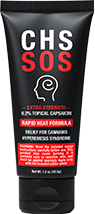
- The Overlap: These TRPV1 receptors are located near CB1 receptors. High doses of heat (or capsaicin) activate TRPV1, temporarily overriding the nausea signals sent by the stressed CB1 system.
The heat doesn’t fix the underlying problem; it simply acts as a powerful **counter-signal** to the brain, providing temporary, but profound, relief.
Cannabis Form and Digestive Impact
The type of product used strongly influences risk, mainly due to how the THC is processed.
| Product Form | Key Mechanism |
|---|---|
| Inhaled (Flower/Vape) | Rapid delivery overwhelms receptors, and THC slows **gastric emptying** (stomach digestion). |
| Concentrates (Dabs) | Extreme potency (up to 90% THC) saturates the ECS, accelerating the dysregulation process. |
| Edibles | Metabolized by the liver into **11-hydroxy-THC** (a stronger, longer-lasting compound), which intensely affects the gut–brain axis. |
The Missing Pieces: What We Don’t Know
While the theories are strong, research has critical gaps:
- The Trigger Mechanism: Why do symptoms stabilize for a few days and then randomly cycle back?
- Genetic Susceptibility: There is no definitive genetic marker to predict who will develop CHS.
- Symptom Persistence: Why does digestive sensitivity often last weeks after the last use?
The One Consistent Finding: Abstinence
Despite the complexity of the internal mechanisms, the clinical solution is clear. Across every major case study and patient report, **complete cessation of all cannabinoids** is the only reliable factor associated with permanent symptom resolution.
Recovery is essentially giving the ECS and the gut time to clear the excess cannabinoids and reset their natural functions.
Frequently Asked Questions
Q: Is CHS a form of cannabis withdrawal?
A: No. CHS is characterized by specific symptoms (severe vomiting, abdominal pain, hot shower relief) that are distinct from typical withdrawal (insomnia, anxiety, irritability).
Q: Is CHS rare?
A: It is likely underdiagnosed. Because early symptoms mimic common digestive issues, many individuals are treated for IBS or anxiety before the link to cannabis is made.
Q: Can CBD trigger CHS?
A: Since CBD is a cannabinoid, it still interacts with the ECS. Many sensitive individuals find they must avoid CBD products (especially oils and flower) to prevent flares.
Disclaimer: This article is for educational purposes only and is not medical advice. Consult a healthcare professional for diagnosis and treatment.