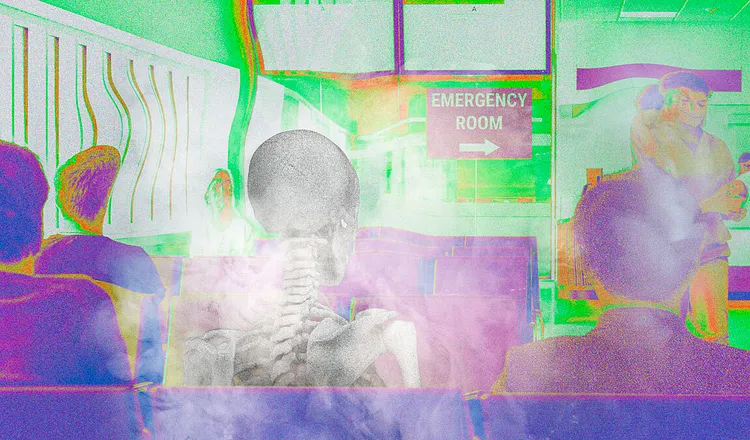



Emergency medicine physicians at Duke Health are sounding the alarm over a sharp rise in visits linked to cannabinoid hyperemesis syndrome, a condition that regularly catches cannabis users completely off guard.
Published by Duke Health on July 28, 2025, the report highlights a pattern that has been building for years inside Duke Regional Hospital’s emergency department in Durham, North Carolina: patients arriving with debilitating waves of nausea, vomiting, and abdominal pain, caused by the very substance many of them thought was helping them feel better.
“We see it every week, sometimes every day”
“Here at Duke Regional, we treat people experiencing cannabinoid hyperemesis syndrome every week, if not every day,” said Joshua Ring, M.D., associate medical director of education at Duke Regional Hospital. “I’m seeing more and more people come into the emergency department with symptoms, often without realizing that their regular cannabis use is the underlying cause.”
Cannabinoid hyperemesis syndrome (CHS) is a condition that develops in people who use cannabis on a consistent basis over an extended period. It produces cycles of severe nausea, relentless vomiting, and cramping pain concentrated in the upper-middle region of the abdomen. One of its most distinctive features, and one of the key diagnostic clues physicians look for, is that patients find temporary relief by taking hot showers or baths, sometimes spending hours at a time doing so.
A surge tied to potency and pandemic-era access
According to Dr. Ring, he began noticing a clear uptick in CHS cases during the COVID-19 pandemic, with the trend continuing upward in the years since. Data supports what he’s seeing on the ground: emergency department visits for CHS doubled nationally between 2017 and 2021. At the same time, cannabis has become simultaneously more accessible and significantly more potent.
“In the 1990s, THC levels in marijuana averaged around 4%. By 2017, that figure had climbed to roughly 17%, and many products today, particularly edibles, regularly exceed 20% THC,” Ring explained. “On top of that, synthetic cannabinoids like Delta-8 and Delta-9 are largely unregulated and have been directly linked to CHS cases.”
This is especially striking in North Carolina, where marijuana remains illegal, yet the rise in CHS cases has followed the same trajectory seen in states where cannabis has been legalized, driven in part by the availability of high-potency synthetic and derivative products.
Who is most at risk
CHS can occur in any person who uses cannabis regularly, but Dr. Ring notes that it appears most frequently in young adult men and older adolescent males who have consumed cannabis daily over a prolonged period. The syndrome is estimated to affect approximately 2.75 million Americans every year.
For most patients, an acute CHS episode runs its course within 24 to 48 hours. In rare but documented cases, symptoms can persist for up to two weeks. Critically, returning to cannabis use after an episode almost always triggers a recurrence, and typically makes each subsequent episode worse.
“Recurrent marijuana use, which is common in this patient population, tends to exacerbate and prolong the condition,” Ring noted. “While cannabis products may offer a fleeting sense of relief, continued use only sustains the cycle of nausea and vomiting, extending the illness and raising the likelihood of repeated hospitalizations.”
The only effective treatment: complete cessation
There is currently no pharmacological cure for CHS. The only intervention that reliably and permanently resolves the syndrome is stopping cannabis use entirely, including all forms of consumption: smoking, edibles, wax concentrates, vape pens, and synthetic cannabinoid products.
This can be a difficult message for patients to accept, particularly those who have used cannabis for years and who may not connect their use to their symptoms. Dr. Ring and his colleagues emphasize that education and open, non-judgmental communication between providers and patients are essential to breaking the cycle.
Anyone experiencing persistent vomiting, severe dehydration, or recurring abdominal pain, particularly if they use cannabis regularly, is urged to seek emergency medical evaluation promptly.
Source: Duke Health News, “Patients with Cannabis-Related Illness are Presenting More Frequently in Duke Health Emergency Department”. Published July 28, 2025. Contact: Matt Talhelm, Media Relations.
Selected clinical references
- AGA Clinical Practice Update on CHS diagnosis and management (2024)
- NIDDK: Treatment and dehydration care for cyclic vomiting
- MedlinePlus: Topical capsaicin use and safety precautions
Sources are selected for the topic of this page. CHS SOS provides general education, not diagnosis or individualized medical advice, and does not describe content as medically reviewed unless that is explicitly stated.
Questions readers often ask
What is the main takeaway from “Duke Health ER Doctors: We’re Treating CHS “Every Week, If Not Every Day””?
Emergency medicine physicians at Duke Health are sounding the alarm over a sharp rise in visits linked to cannabinoid hyperemesis syndrome, a condition that regularly catches cannabis users completely off guard. Published…
When do nausea or vomiting symptoms need urgent medical care?
Seek urgent care if you cannot keep fluids down, have very little or very dark urine, feel faint or confused, have blood in vomit, chest pain, or severe or unusual pain. Online information should not delay emergency evaluation.
What should I do next if I am still unsure?
Use the CHS Symptom Check to organize the pattern, review the CHS Action Plan, and bring your timeline to a qualified clinician. Seek urgent care now if severe vomiting or dehydration warning signs are present.
Medical disclaimer: CHS SOS provides educational information and does not diagnose or treat medical conditions. Seek advice from a qualified healthcare professional.