
As cannabinoid hyperemesis syndrome becomes more widely known, a Harvard Medical School physician is raising an urgent counterpoint: the growing awareness of CHS may itself be creating a new diagnostic hazard, one that could leave patients with entirely different, potentially life-threatening conditions going untreated.
The concern was raised by Jordan Tishler, an instructor of medicine at Harvard Medical School and president of the Association of Cannabinoid Specialists, and was reported by Gillian Jalimnson in Hemp Gazette on July 10, 2025. Tishler’s argument is not that CHS isn’t real or serious, because it clearly is, but that the reflex to diagnose it in any cannabis user who presents with vomiting is creating a new category of clinical error.
What CHS actually is
Cannabinoid hyperemesis syndrome, sometimes colloquially referred to as “scromiting,” a portmanteau of screaming and vomiting, is a condition defined by intense abdominal pain and relentless vomiting, sometimes severe enough that patients cry out involuntarily during episodes. It develops in people who use cannabis heavily and chronically, and symptoms typically subside once cannabis use is stopped completely.
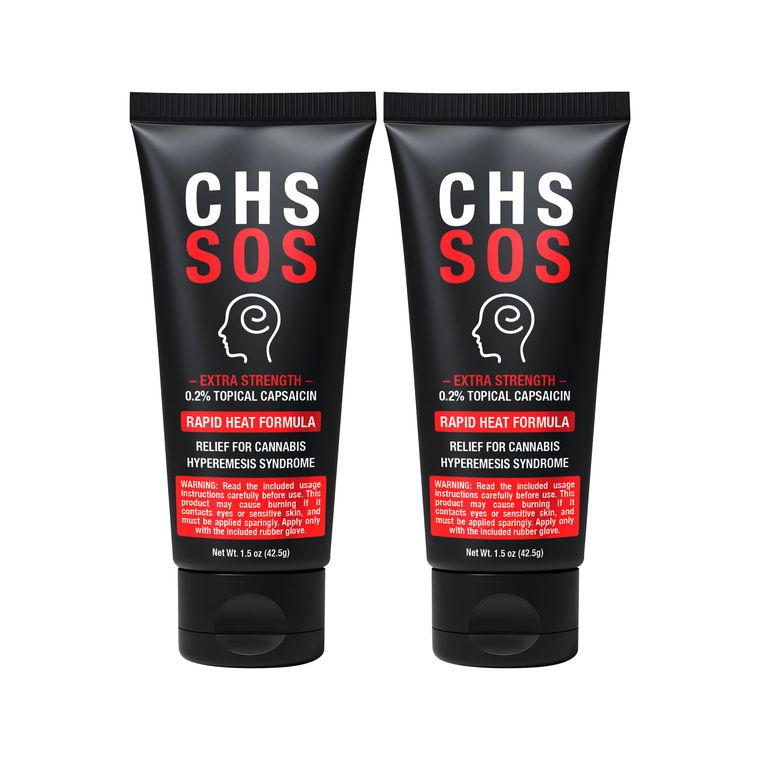
Standard antiemetic medications generally provide little to no relief during acute CHS episodes. Management is largely supportive: intravenous fluids, electrolyte correction, and in some cases partial relief through benzodiazepines, topical capsaicin, or prolonged exposure to hot water via showers or baths.
The condition is becoming more common in the United States, not because it is fundamentally new, but because the population of heavy, long-term cannabis users has grown substantially as legalization spreads and social stigma fades. Population-level data suggest an overall prevalence of approximately 0.1%, with the condition concentrated in young adults between 18 and 39. Among those specifically diagnosed with cannabis use disorder, however, the prevalence climbs dramatically, up to 32%.
The risk hiding inside awareness: anchoring bias
Tishler’s concern centers on what happens when a physician sees a cannabis user with vomiting and stops thinking after reaching that first data point. In clinical psychology and medicine, this is known as anchoring bias: a cognitive pattern in which an initial piece of information, in this case the patient’s cannabis use, becomes so dominant in the clinician’s reasoning that alternative or coexisting diagnoses are never seriously considered.
“There’s a risk that clinicians may be attributing any vomiting in a cannabis user to CHS,” Tishler explains, noting that the risk is amplified in fast-paced emergency settings where time pressure encourages diagnostic shortcuts.
The consequences can be severe. Tishler points to a telling case: a young patient with a cannabis use history arrived with symptoms consistent with CHS. The clinical team attributed the presentation to the syndrome. What the patient actually had was superior mesenteric artery (SMA) syndrome, a rare but potentially fatal condition caused by compression of the duodenum, a diagnosis that was significantly delayed because the team had already settled on CHS. The treatment for SMA syndrome is entirely different, and delays can be dangerous.
What needs to change
Tishler’s prescription is not to dismiss CHS but to demand higher diagnostic rigor around it. CHS should be a diagnosis of exclusion, reached only after other causes of cyclical vomiting have been systematically ruled out, not assumed on the basis of cannabis use alone.
“Institutions should offer clear guidelines on how to accurately diagnose CHS, with an emphasis on ruling out other causes of vomiting first,” he says. “We must also train physicians to recognize and counteract their own implicit biases, especially in relation to substance use.”
The underlying message is one the broader CHS conversation would benefit from: raising awareness of a condition is only half the work. The other half is ensuring that awareness doesn’t become a new form of tunnel vision, one that puts patients at risk not from CHS itself, but from what gets missed while looking for it.
Source: Gillian Jalimnson, “Cannabinoid Hyperemesis Syndrome: The Misdiagnosis Risk,” Hemp Gazette, July 10, 2025. Expert commentary by Jordan Tishler, MD, Harvard Medical School / Association of Cannabinoid Specialists.
Selected clinical references
- AGA Clinical Practice Update on CHS diagnosis and management (2024)
- NIDDK: How cyclic vomiting syndrome is diagnosed
- NIDDK: How gastroparesis is diagnosed
Sources are selected for the topic of this page. CHS SOS provides general education, not diagnosis or individualized medical advice, and does not describe content as medically reviewed unless that is explicitly stated.
Questions readers often ask
What is the main takeaway from “Harvard Physician Warns: CHS Awareness Is Creating Its Own Diagnostic Trap”?
As cannabinoid hyperemesis syndrome becomes more widely known, a Harvard Medical School physician is raising an urgent counterpoint: the growing awareness of CHS may itself be creating a new diagnostic hazard, one…
Can this information confirm a CHS diagnosis?
No. CHS overlaps with several gastrointestinal and medical conditions. A qualified clinician must evaluate the complete symptom pattern, cannabis exposure, examination findings, and other possible causes.
Can topical capsaicin replace cannabis cessation or medical care?
No. Topical capsaicin is discussed as a warming comfort option, not a cure. It does not replace complete cannabis cessation, hydration assessment, emergency care when warning signs are present, or individualized advice from a qualified clinician.
What should I do next if I am still unsure?
Use the CHS Symptom Check to organize the pattern, review the CHS Action Plan, and bring your timeline to a qualified clinician. Seek urgent care now if severe vomiting or dehydration warning signs are present.
Medical disclaimer: CHS SOS provides educational information and does not diagnose or treat medical conditions. Seek advice from a qualified healthcare professional.