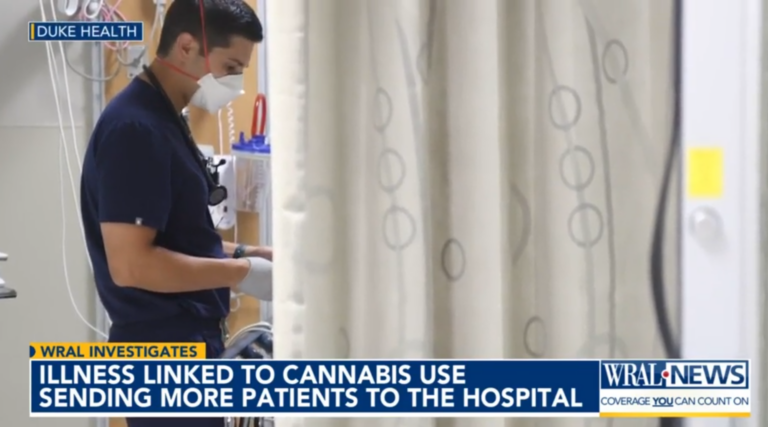

As marijuana legalization reshapes the landscape of cannabis access across the United States, physicians are warning that the products reaching consumers today bear little resemblance to what the drug was a generation ago, and a growing cluster of hospitalizations is documenting the consequences.
Reported by Theara Coleman in The Week (last updated February 20, 2025), the piece examines how cannabinoid hyperemesis syndrome (CHS) has moved from medical curiosity to a condition that researchers are actively pushing healthcare systems and government regulators to take seriously.
A condition that builds slowly, then strikes hard
CHS doesn’t appear after a single session or a brief period of use. The syndrome typically develops after a decade or more of chronic, heavy cannabis consumption. According to the Cleveland Clinic, patients often notice the first warning signs, persistent nausea, abdominal cramping, and a general sense of illness, only after approximately 10 to 12 years of regular use. By the time the full syndrome emerges, the episodes of vomiting are often severe enough to require emergency care.
The term “scromiting,” a blend of screaming and vomiting, has entered clinical use to describe the acute phase of CHS. The Cleveland Clinic notes that patients in the throes of a severe episode may scream involuntarily due to the intensity of the abdominal pain accompanying the vomiting. It is, by any measure, one of the more visually striking and distressing presentations in emergency medicine.
One of the syndrome’s most consistent features is the temporary relief patients find in heat. Hundreds of patients have described spending hours in scalding hot showers and baths during episodes, some returning to the shower again and again throughout the day. This compulsive heat-seeking behavior has become a recognized diagnostic clue, distinguishing CHS from other causes of cyclical vomiting.
The THC potency explosion
Understanding why CHS cases are climbing requires understanding what has happened to cannabis itself. In the 1990s, the average THC content of cannabis was roughly 5%. Today’s commercial products, vape cartridges, fast-acting edibles, pre-rolled joints enhanced with concentrates, can contain as much as 99% THC. This is not a modest incremental change; it is a wholesale transformation of the drug’s chemical profile.
A 2024 study published in the Journal of Clinical Gastroenterology tracked CHS-related hospitalizations at a major Massachusetts hospital across two time points, 2012 and 2021, spanning the state’s cannabis legalization. The increase in hospitalizations between those two years was significant, mirroring patterns seen in other states that have expanded legal access.
As hospitals encountered more CHS cases alongside an ever-expanding menu of high-potency products, researchers began calling for clearer public health guidance and more systematic provider education. “Awareness was slow to spread,” the reporting notes, a damning summary of how the medical establishment lagged behind the industry it was treating the consequences of.
“A difference between legalizing the original cannabis and the products that exist today”
Neuroscientist Yasmin Hurd, whose work has focused on cannabis’s effects on the brain, captured the core issue with precision: “There’s a difference in legalizing the original cannabis on the planet and the products that exist today.”
The products that exist today were not what policymakers were envisioning when legalization frameworks were debated. The regulatory structures built around cannabis, where they exist at all, were not designed with 99% THC extracts in mind. Researchers cited in the article are calling not only for clinical awareness but for meaningful government oversight of a legal cannabis industry that has, in the view of many in the public health community, outpaced any corresponding safety infrastructure.
The medical field, experts say, is struggling to keep up. The drugs are changing faster than the clinical literature, the training curricula, and the regulatory frameworks that govern them. CHS is one visible result of that gap, but likely not the only one.
Selected clinical references
- AGA Clinical Practice Update on CHS diagnosis and management (2024)
- NCBI Bookshelf: Cannabinoid Hyperemesis Syndrome
- Cleveland Clinic: CHS symptoms, causes, and treatment
Sources are selected for the topic of this page. CHS SOS provides general education, not diagnosis or individualized medical advice, and does not describe content as medically reviewed unless that is explicitly stated.
Questions readers often ask
What is the main takeaway from “From 5% to 99% THC: How the Cannabis Industry Outpaced Medicine and CHS Filled the Gap”?
As marijuana legalization reshapes the landscape of cannabis access across the United States, physicians are warning that the products reaching consumers today bear little resemblance to what the drug was a generation…
What pattern makes CHS different from occasional nausea?
CHS is associated with prolonged cannabis exposure and a recurring pattern that may progress through prodromal, hyperemetic, and recovery phases. Hot bathing behavior is common, but no single symptom proves CHS.
What should I do next if I am still unsure?
Use the CHS Symptom Check to organize the pattern, review the CHS Action Plan, and bring your timeline to a qualified clinician. Seek urgent care now if severe vomiting or dehydration warning signs are present.
Medical disclaimer: CHS SOS provides educational information and does not diagnose or treat medical conditions. Seek advice from a qualified healthcare professional.