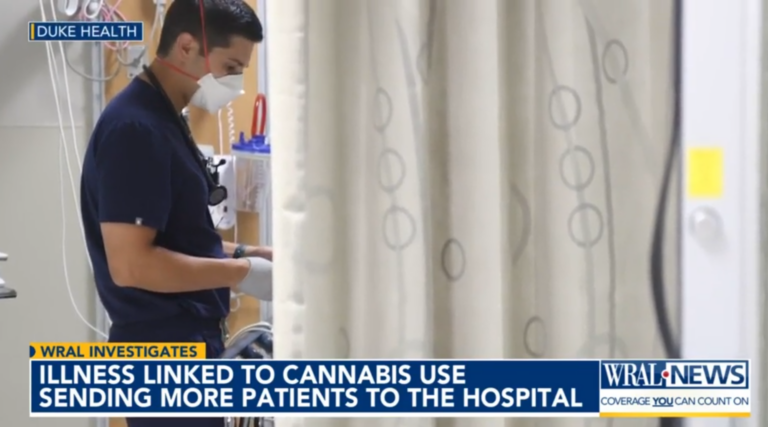

A sharp exchange of perspectives published in STAT News on July 19, 2025 captures the growing tension within medicine over cannabinoid hyperemesis syndrome, not about whether it exists, but about whether it is being identified correctly, and what the consequences are when it isn’t.
The letters, compiled by STAT First Opinion editor Torie Bosch, respond to an earlier piece by Jordan Tishler, president of the Association of Cannabinoid Specialists and an instructor at Harvard Medical School, who argued that emergency physicians in Massachusetts were making CHS diagnoses too quickly and too confidently, without adequately ruling out other conditions. Three voices push back. None of them dismiss the concern entirely. But each adds a layer of complexity that Tishler’s original argument, they suggest, overlooked.
The original claim: CHS is being over-diagnosed
Tishler’s position, outlined in a previous STAT essay titled “ER docs are too quick to assume cannabis users are experiencing this rare side effect,” was that clinicians are anchoring, a well-documented cognitive bias in which an initial piece of information dominates subsequent reasoning, on cannabis use when any patient vomits. His concern was grounded in a real case where a young cannabis user’s vomiting was attributed to CHS, only for the actual cause to be superior mesenteric artery (SMA) syndrome, a rare and potentially life-threatening compression of the duodenum.
The respondents don’t dispute that anchoring bias is real, or that dangerous misdiagnoses can and do occur. What they challenge is whether Tishler’s conclusion, that CHS is dangerously over-diagnosed, is supported by the evidence he offered, which consisted largely of anecdotal reports and informal polling of colleagues rather than any systematic data.
Response from a gastroenterologist: the data tell a different story
A practicing gastroenterologist writing in response draws on their own institution’s data to push back on the over-diagnosis framing. The numbers, they argue, don’t support Tishler’s alarm, and actually point in the opposite direction.
The rise in CHS cases has been steepest among adults between 18 and 34, a demographic that is both the most susceptible to cannabis marketing and at the highest statistical risk of developing substance use disorders. That demographic trend, combined with the well-documented surge in THC potency over the past three decades, produces a straightforward epidemiological explanation for why CHS cases are climbing, one that does not require over-diagnosis as a premise.
The gastroenterologist does validate one element of Tishler’s concern: CHS has placed a substantial and growing financial burden on healthcare systems. At their own hospital, spending on CHS-related hospitalizations increased by 150% following cannabis legalization in the state. But crucially, they argue, that cost is not driven by reckless or hasty diagnosis. It is driven by the work required to rule out other conditions before CHS can be confirmed. X-rays, CT scans, endoscopies: the diagnostic process for CHS is expensive precisely because it demands exclusion of alternatives, not because clinicians are skipping that step.
Similar cost patterns have been reported by other health systems, the letter notes, suggesting the financial burden is systemic, not a byproduct of diagnostic shortcuts.
A patient’s perspective: the opposite problem
Linda Hay writes from personal experience, and her experience runs counter to Tishler’s thesis in a direct and telling way. A physician, she recounts, assumed she had CHS when she presented with vomiting. She explained to him that her symptoms occurred only in the mornings and resolved once she had vomited. She had never needed a hot shower or bath for relief, a behavioral hallmark that is considered one of the most diagnostically significant features of genuine CHS.
The doctor, she writes, had already made up his mind. He stopped listening. Whatever the actual cause of her symptoms was, it resolved on its own. She continues to use cannabis without issue.
“This doctor made me feel defensive because I could tell he’d already reached a conclusion,” she wrote. “Very frustrating experience for me.”
Her account illustrates the real failure mode: not that CHS is over-diagnosed categorically, but that the diagnostic process can collapse into assumption when a clinician stops engaging with the specifics of a patient’s presentation.
A retired ED physician: balance, but not equivalence
A recently retired emergency department physician agrees that anchoring is a genuine hazard in emergency medicine, not just around cannabis but across a wide range of patient presentations. Patients who visit frequently, who have known substance use histories, or who present in ways that trigger implicit bias are all at elevated risk of receiving a diagnosis shaped more by assumption than by clinical evidence.
But the retired physician also adds a counterweight: SMA syndrome is exceedingly rare, while CHS is now a relatively common presentation in emergency departments nationwide. The argument that every cannabis-using patient with nausea and vomiting should receive an extensive workup to rule out conditions as rare as SMA raises its own set of practical and ethical questions, about resource allocation, radiation exposure, procedural risk, and the burden placed on patients whose presentation fits the CHS profile clearly.
The picture that emerges from all three letters is not a clean verdict either way. CHS is real, rising, and frequently misattributed to other causes, or, as Hay’s case suggests, occasionally attributed to cannabis when something else is happening. What the debate underscores most clearly is the need for structured clinical guidelines: specific diagnostic criteria, defined exclusion criteria, and a shared framework that reduces the influence of individual bias in either direction.
Source: Torie Bosch, “Is cannabinoid hyperemesis syndrome overdiagnosed?” STAT News — First Opinion, July 19, 2025. Letters in response to Jordan Tishler, “ER docs are too quick to assume cannabis users are experiencing this rare side effect.”
Selected clinical references
- AGA Clinical Practice Update on CHS diagnosis and management (2024)
- NIDDK: How cyclic vomiting syndrome is diagnosed
- NIDDK: How gastroparesis is diagnosed
Sources are selected for the topic of this page. CHS SOS provides general education, not diagnosis or individualized medical advice, and does not describe content as medically reviewed unless that is explicitly stated.
Questions readers often ask
What is the main takeaway from “ Is CHS Being Over-Diagnosed? STAT News Publishes the Debate and the Answer Is More Complicated Than Either Side Admits”?
A sharp exchange of perspectives published in STAT News on July 19, 2025 captures the growing tension within medicine over cannabinoid hyperemesis syndrome, not about whether it exists, but about whether it…
Can this information confirm a CHS diagnosis?
No. CHS overlaps with several gastrointestinal and medical conditions. A qualified clinician must evaluate the complete symptom pattern, cannabis exposure, examination findings, and other possible causes.
Can topical capsaicin replace cannabis cessation or medical care?
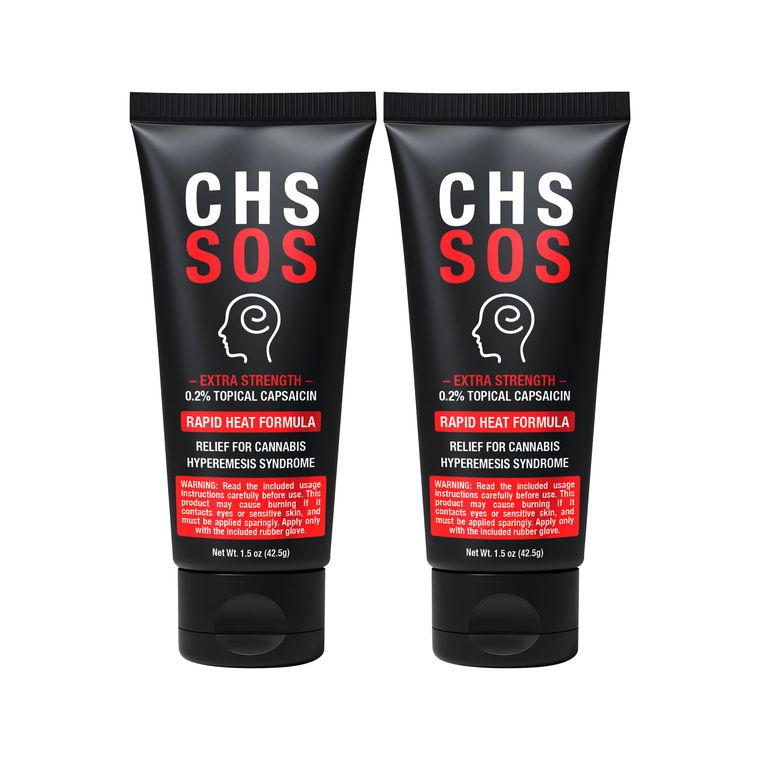
No. Topical capsaicin is discussed as a warming comfort option, not a cure. It does not replace complete cannabis cessation, hydration assessment, emergency care when warning signs are present, or individualized advice from a qualified clinician.
What should I do next if I am still unsure?
Use the CHS Symptom Check to organize the pattern, review the CHS Action Plan, and bring your timeline to a qualified clinician. Seek urgent care now if severe vomiting or dehydration warning signs are present.
Medical disclaimer: CHS SOS provides educational information and does not diagnose or treat medical conditions. Seek advice from a qualified healthcare professional.