


Cannabis is widely associated with relaxation, relief, and a sense of well-being, but for a subset of long-term heavy users, it can trigger a cycle of vomiting so severe that it lands them in the emergency room. Researchers at the University of Washington explain what’s happening and what to do about it.
For most people, a post-work edible or a casual smoke with friends stays exactly that, a low-key, enjoyable experience. But for some heavy, long-term cannabis users, that same habit can transform without warning into something far darker: day after day of uncontrollable nausea, retching, and abdominal pain that disrupts every aspect of daily life.
That condition is cannabinoid hyperemesis syndrome, or CHS, and according to Denise Walker, PhD, a researcher at the University of Washington’s Center for Cannabis Research, it’s more misunderstood than most people realize.
What CHS is, and what it isn’t
CHS is characterized by recurring episodes of nausea, vomiting, and abdominal cramping that occur in people who have been consuming cannabis heavily over a long period of time. It is not caused by occasional or moderate use, and it is not simply a bad reaction to a single session. The pattern that defines CHS is repetition: episodes that keep coming back, worsening over time, tied unmistakably to sustained heavy cannabis consumption.
Importantly, not every long-term cannabis user will develop CHS. The condition doesn’t affect everyone who uses heavily, and as of now, researchers don’t fully understand why some people are susceptible and others aren’t.
“It’s kind of a mystery,” Walker acknowledges, “but we do know that those who are more at risk for CHS tend to be younger, from adolescence through young adulthood, and those who heavily use high-potency products.”
If you use cannabis occasionally, the risk is extremely low. CHS requires sustained, frequent, long-term use to develop. That said, combining cannabis with alcohol or other substances can produce nausea and vomiting through separate mechanisms, so those experiences shouldn’t be confused with CHS.
Don’t skip the doctor, even if you suspect CHS
Because CHS symptoms, nausea, vomiting, and abdominal pain, overlap substantially with those of many unrelated gastrointestinal conditions, it’s important not to self-diagnose. If you’re a regular cannabis user who begins experiencing these symptoms, the right first step is a visit to your primary care provider.
“Your doctor will take a careful medical history, including a thorough account of your cannabis use, to rule out other disorders,” says Walker. “Sometimes, symptoms of CHS overlap with symptoms from other diagnoses under the umbrella of gastroenterology.”
Conditions like cyclic vomiting syndrome, gastroparesis, gastroenteritis, and even eating disorders can look strikingly similar to CHS on initial presentation. A proper clinical evaluation, not a self-assessment, is the appropriate path to an accurate diagnosis.
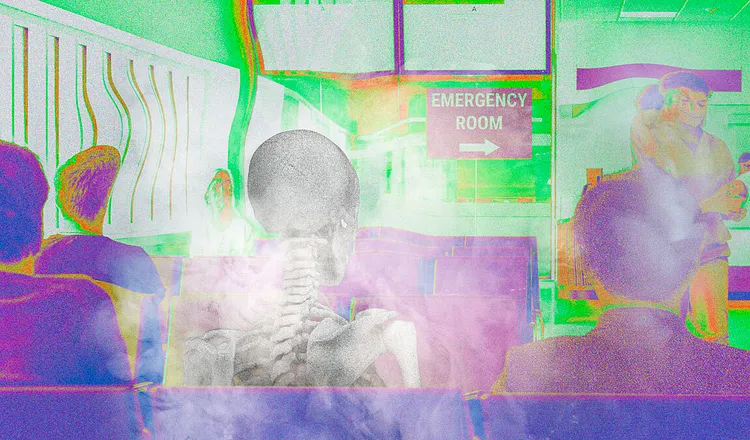
If the vomiting and pain are severe or continuous, don’t wait for a scheduled appointment. Go directly to the emergency department.
“As with any condition involving repeated vomiting, there are real risks: dehydration, electrolyte imbalances, and potential damage to the lining of the esophagus,” Walker explains. “When vomiting is uncontrolled, those risks become urgent.”
The hot shower relief, and what it means
One of the most well-documented features of CHS, and one of the most clinically useful, is that patients consistently report finding temporary relief by taking hot showers or baths. Some spend hours doing this during acute episodes, sometimes multiple times per day. The relief is real but short-lived; it does not address the underlying cause and does not prevent the next episode.
This compulsive bathing behavior is now considered a hallmark sign of CHS, and physicians who know what to look for can use it to distinguish CHS from other causes of cyclical vomiting.
There is only one way out
There is currently no medication that reliably cures CHS. Standard antiemetic drugs, used routinely to control nausea, often provide little benefit. Some patients find partial short-term relief from topical capsaicin or certain antipsychotic drugs, but none of these approaches resolve the underlying condition.
The only treatment that works definitively is complete abstinence from cannabis, in all its forms. Smoking, edibles, vape pens, concentrates, synthetic cannabinoids: all of it needs to stop. Symptoms typically resolve after cessation, sometimes within days to weeks. But returning to use, even after a prolonged break, almost always brings the syndrome back.
This is understandably difficult to accept for people who have used cannabis regularly for years, or who rely on it to manage other conditions. But the evidence is consistent: as long as cannabis use continues, CHS will continue.
Source: Ari Cofer, “How Cannabis Hyperemesis Syndrome Makes You Vomit — a Lot,” Right as Rain by UW Medicine, March 5, 2025. Expert commentary by Denise Walker, PhD, University of Washington Center for Cannabis Research.
Selected clinical references
- AGA Clinical Practice Update on CHS diagnosis and management (2024)
- NIDDK: Treatment and dehydration care for cyclic vomiting
- MedlinePlus: Topical capsaicin use and safety precautions
Sources are selected for the topic of this page. CHS SOS provides general education, not diagnosis or individualized medical advice, and does not describe content as medically reviewed unless that is explicitly stated.
Questions readers often ask
What is the main takeaway from “Why Heavy Cannabis Use Can Suddenly Cause Days of Uncontrollable Vomiting, UW Medicine Explains”?
Cannabis is widely associated with relaxation, relief, and a sense of well-being, but for a subset of long-term heavy users, it can trigger a cycle of vomiting so severe that it lands…
When do nausea or vomiting symptoms need urgent medical care?
Seek urgent care if you cannot keep fluids down, have very little or very dark urine, feel faint or confused, have blood in vomit, chest pain, or severe or unusual pain. Online information should not delay emergency evaluation.
What should I do next if I am still unsure?
Use the CHS Symptom Check to organize the pattern, review the CHS Action Plan, and bring your timeline to a qualified clinician. Seek urgent care now if severe vomiting or dehydration warning signs are present.
Medical disclaimer: CHS SOS provides educational information and does not diagnose or treat medical conditions. Seek advice from a qualified healthcare professional.