
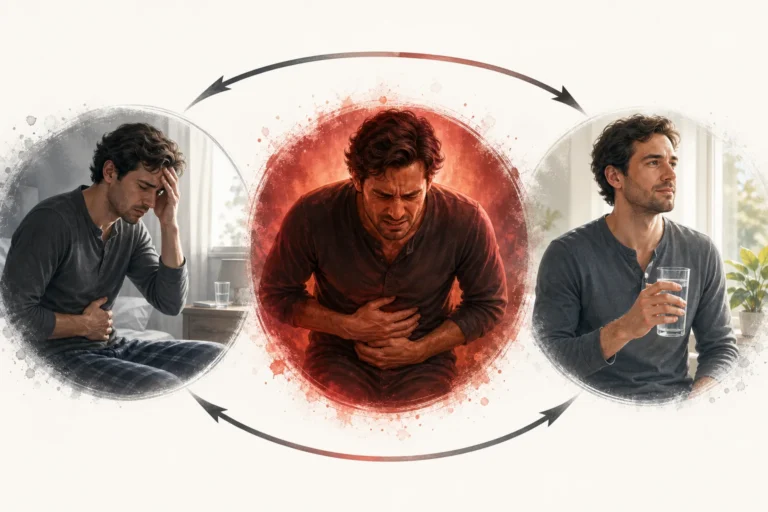
When severe vomiting stops, recovery may still include fatigue, poor appetite, abdominal sensitivity, disrupted sleep, and anxiety about eating. There is no proven CHS detox or universal protocol that rapidly resets the gut. Recovery should be guided by symptom severity and any instructions given by the treating clinician.
The priorities are to confirm that dehydration and other complications are resolving, return to fluids and food gradually, and maintain complete cannabis abstinence to reduce recurrence risk.
First confirm that the crisis is actually improving
A pause in vomiting does not always mean that fluid and electrolyte problems are corrected. Monitor urine output, dizziness, weakness, pain, and the ability to keep fluids down. Return for urgent care if vomiting restarts, urine becomes very dark or infrequent, you faint or become confused, or blood, chest pain, or severe pain appears.
Reintroduce intake in small steps
Follow discharge instructions when they are available. If symptoms are mild and improving, small frequent sips may be easier than a large volume. An oral rehydration solution may be useful for measured fluid and electrolytes. Add simple foods in modest portions as tolerated, then broaden the diet rather than staying on a restrictive plan indefinitely.
- Avoid alcohol and cannabis during recovery.
- Do not combine many new supplements while the stomach is sensitive.
- Record foods, fluids, vomiting, pain, and urine output.
- Ask for nutrition support if intake or weight does not recover.
Build recurrence prevention into recovery
Complete cannabis cessation is not a temporary add-on to the recovery plan; it is the central step for preventing CHS from returning. If cravings, withdrawal, pain, sleep, or mood make abstinence difficult, arrange support rather than substituting CBD or another cannabis product.
Questions for follow-up
Ask whether repeat laboratory tests are needed, how quickly to increase activity and diet, which medicines should be continued, and what symptoms should prompt a return to care. Individual advice matters after a severe or prolonged episode.
Let tolerance guide the pace, not a rigid internet schedule
There is no universal menu that every person should follow after a vomiting episode. Medical history, diabetes, pregnancy, kidney or heart conditions, food allergies, medications, and the severity of dehydration can change what is appropriate. Follow discharge instructions and ask for individualized nutrition support when intake remains difficult.
Track what stays down, portion size, time between intake and symptoms, urine output, bowel changes, and abdominal pain. Expanding too quickly can feel discouraging, while restricting food for too long can worsen weakness and nutrition. A gradual plan should still move forward as tolerated and be reassessed when it does not.
- Use small amounts and pause when nausea clearly increases.
- Keep hydration and food goals separate so each can be evaluated.
- Avoid labeling a specific food as the cause from one difficult attempt.
Recovery includes preventing the next episode
Feeling able to eat again does not resolve the larger CHS question. Use the recovery window to maintain complete cannabis cessation, arrange follow-up, review laboratory abnormalities or weight loss, and build support for cravings or withdrawal. Switching cannabinoid products is not the same as removing exposure.
Return for urgent assessment if vomiting restarts and fluids will not stay down, urine output falls, or fainting, confusion, blood, chest pain, severe weakness, fever, or severe or unusual abdominal pain appears. A written escalation plan makes it easier to act before the next episode becomes a crisis.
Continue with a focused next step
- Review hydration and nutrition during recovery
- Follow the CHS recovery timeline
- Plan for preventing CHS recurrence
Sources and further reading
Selected clinical references
- AGA Clinical Practice Update on CHS diagnosis and management (2024)
- National Institute on Drug Abuse: Cannabis and cannabis use disorder
- SAMHSA: Confidential treatment referral and support
Sources are selected for the topic of this page. CHS SOS provides general education, not diagnosis or individualized medical advice, and does not describe content as medically reviewed unless that is explicitly stated.
Questions readers often ask
What is the main takeaway from “Digestive Recovery After a CHS Episode: A Practical Guide”?
Recovery after a CHS episode should be gradual and safety-first. Rebuild fluid and food intake without unsupported detox or microbiome claims.
What is the most important step in preventing CHS from returning?
Complete cannabis cessation is the key step associated with preventing CHS recurrence. Recovery timing differs between people, and support from a qualified clinician or substance-use professional can make the adjustment safer and more manageable.
What should I do next if I am still unsure?
Use the CHS Symptom Check to organize the pattern, review the CHS Action Plan, and bring your timeline to a qualified clinician. Seek urgent care now if severe vomiting or dehydration warning signs are present.
Medical disclaimer: CHS SOS provides educational information and does not diagnose or treat medical conditions. Seek advice from a qualified healthcare professional.

Leave a comment