


CHS symptoms are best understood as a recurring pattern rather than a checklist. Repeated nausea and vomiting, abdominal pain, periods of improvement, substantial cannabis exposure, and temporary hot-water relief may occur together, but no single feature confirms the diagnosis.
The most important distinction is between a pattern that needs follow-up and an acute episode that is already unsafe to manage at home.
Possible prodromal symptoms
Before severe vomiting, some people report recurring nausea, abdominal discomfort, reduced appetite, or worry about vomiting while cannabis use continues. Morning symptoms and increasing hot-water use are sometimes described, but they are nonspecific.
Pregnancy, medicines, reflux, migraine-related conditions, infection, anxiety, and other disorders can overlap. Early symptoms warrant documentation and evaluation, not certainty from an online list.
Hyperemetic symptoms and complications
The acute phase can involve repeated vomiting, retching, abdominal pain, inability to eat or drink, and frequent hot bathing. Fluid and electrolyte losses may lead to limited urine, dizziness, fainting, weakness, confusion, kidney injury, or other complications.
Seek urgent care when fluids will not stay down, urine becomes very limited or dark, or blood in vomit, chest pain, fever, severe weakness, fainting, confusion, or severe or unusual pain appears.
Recovery symptoms do not follow one clock
Vomiting may stop before hydration, appetite, food tolerance, sleep, mood, energy, and concentration stabilize. Cannabis withdrawal can add craving, irritability, restlessness, low mood, sleep problems, reduced appetite, vivid dreams, or headache.
Track gastrointestinal and withdrawal-related symptoms separately. Recurring or worsening vomiting should not automatically be labeled withdrawal or a normal part of recovery.
Features that support but do not prove CHS
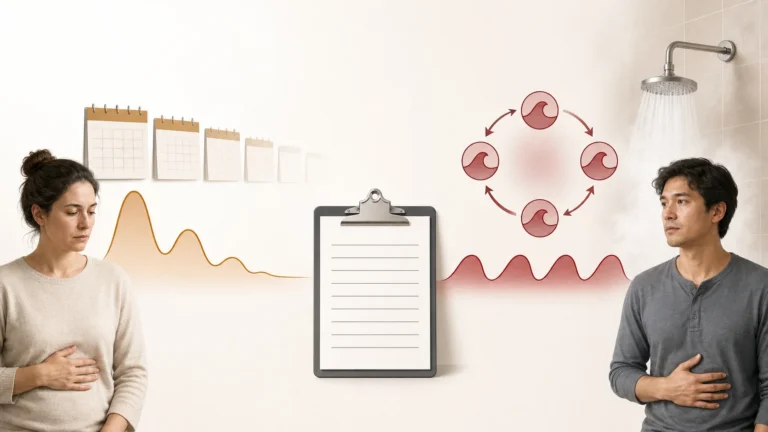
Clinicians consider the episode pattern, prolonged frequent cannabis exposure, hot-water behavior, symptom-free intervals, and sustained improvement during complete abstinence. Not everyone has every feature, and several features occur in cyclic vomiting syndrome or other illnesses.
A normal test result does not prove CHS. Tests help assess complications and alternatives, and their meaning depends on the history and examination.
What to record before an appointment
Record episode start and end times, vomiting frequency, fluid and food tolerance, urine output, pain, fever, blood, hot-water behavior, symptom-free intervals, medicines, pregnancy possibility, and other substances. Add cannabis frequency, product types, potency when known, and the last use.
Also document what happened during complete abstinence. A precise timeline gives the clinician more useful evidence than a symptom score alone.
Continue with a focused next step
Sources and further reading
- AGA Clinical Practice Update on CHS (2024)
- NIDDK dehydration warning signs
- AGA guidance on cyclic vomiting syndrome
Selected clinical references
- AGA Clinical Practice Update on CHS diagnosis and management (2024)
- NIDDK: How cyclic vomiting syndrome is diagnosed
- NIDDK: How gastroparesis is diagnosed
Sources are selected for the topic of this page. CHS SOS provides general education, not diagnosis or individualized medical advice, and does not describe content as medically reviewed unless that is explicitly stated.
Questions readers often ask
What is the main takeaway from “CHS Symptoms: Signs, Stages, and When to Seek Care”?
Check early, acute, and recovery-stage symptoms—and know which warning signs need urgent care.
Can this information confirm a CHS diagnosis?
No. CHS overlaps with several gastrointestinal and medical conditions. A qualified clinician must evaluate the complete symptom pattern, cannabis exposure, examination findings, and other possible causes.
Can topical capsaicin replace cannabis cessation or medical care?
No. Topical capsaicin is discussed as a warming comfort option, not a cure. It does not replace complete cannabis cessation, hydration assessment, emergency care when warning signs are present, or individualized advice from a qualified clinician.
What should I do next if I am still unsure?
Use the CHS Symptom Check to organize the pattern, review the CHS Action Plan, and bring your timeline to a qualified clinician. Seek urgent care now if severe vomiting or dehydration warning signs are present.
Medical disclaimer: CHS SOS provides educational information and does not diagnose or treat medical conditions. Seek advice from a qualified healthcare professional.
Leave a comment