

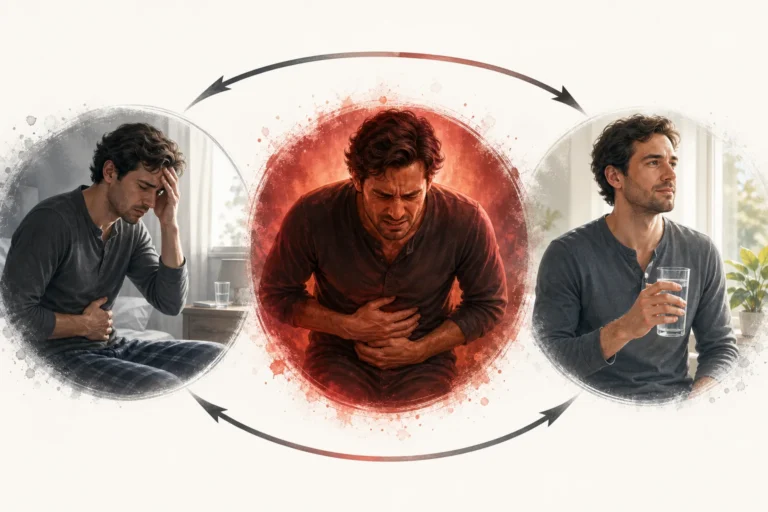
The hyperemetic phase involves intense, repeated vomiting and can cause dehydration, electrolyte abnormalities, kidney injury, and injury to the esophagus. It is not a phase that everyone can safely manage at home.
Online guidance cannot assess vital signs, laboratory values, pregnancy, infection, obstruction, or other causes of severe vomiting. When warning signs are present, urgent medical evaluation is the action plan.
Know the threshold for urgent care
Seek urgent care if fluids will not stay down, urine is very dark or infrequent, or there is fainting, confusion, severe weakness, blood in vomit, chest pain, fever with severe symptoms, or severe or unusual abdominal pain. Call emergency services if the person is collapsing, difficult to wake, having trouble breathing, or cannot be transported safely.
Hydration is an assessment, not a contest
Small sips may be tolerated during mild symptoms, but repeatedly forcing large volumes can provoke more vomiting. Severe losses may require intravenous fluids and electrolyte monitoring. Water, sports drinks, or oral rehydration products do not replace evaluation when symptoms are escalating.
- Record vomiting frequency and the time of the last urination.
- Bring a list of medicines, cannabis products, and other substances.
- Do not drive yourself when faint, confused, or severely weak.
- Do not delay care while trying multiple home remedies.
Use heat and topical capsaicin cautiously
Hot showers may temporarily change discomfort, but prolonged very hot bathing can contribute to burns, falls, or fluid loss. Topical capsaicin can cause burning and irritation. Use it only as directed on the product label, only on intact external skin, keep it away from eyes and mucous membranes, and avoid direct heat over the application area. It is not a cure and does not replace cannabis cessation or medical care.
After stabilization
Ask for clear discharge instructions, a plan for returning if symptoms recur, and support for complete cannabis cessation. A written episode timeline can make follow-up more productive and help distinguish CHS from other recurrent vomiting conditions.
Bring the information an urgent-care team can use
If possible, bring a list of medicines, allergies, medical conditions, cannabis and CBD products, the last time you used each one, and the number and duration of vomiting episodes. Report the last time you urinated, what fluids stayed down, hot-shower use, pregnancy possibility, and any blood, fever, chest pain, fainting, or unusual abdominal pain.
Do not minimize cannabis exposure because you expect judgment. The information can change the differential diagnosis and the care team's interpretation of recurring episodes. At the same time, ask what other urgent causes are being considered; cannabis use should not end a complete evaluation when the presentation is atypical or severe.
- Bring previous discharge summaries or laboratory results when available.
- Ask which warning signs should prompt an immediate return.
- Confirm who will review follow-up tests and medication instructions.
Use discharge as the start of the prevention plan
Acute treatment may stabilize fluids, electrolytes, nausea, or pain, but it does not guarantee that another episode will not occur. Before leaving, clarify hydration and food instructions, skin precautions for any topical treatment, medicines to avoid or continue, and the expected follow-up.
Complete cannabis cessation is central when CHS is suspected. Arrange practical support for withdrawal and cravings, remove products when it is safe, and schedule a clinician who can review the longer pattern rather than waiting for another emergency visit. If symptoms return or warning signs appear, use the escalation plan rather than trying to outlast severe vomiting at home.
Continue with a focused next step
- Review treatment options and their limits
- Use the CHS Action Plan
- Plan recovery after the acute episode
Sources and further reading
Selected clinical references
- AGA Clinical Practice Update on CHS diagnosis and management (2024)
- NIDDK: Treatment and dehydration care for cyclic vomiting
- MedlinePlus: Topical capsaicin use and safety precautions
Sources are selected for the topic of this page. CHS SOS provides general education, not diagnosis or individualized medical advice, and does not describe content as medically reviewed unless that is explicitly stated.
Questions readers often ask
What is the main takeaway from “The CHS Hyperemetic Phase: A Safety-First Guide”?
The hyperemetic phase can become a medical emergency. Use a safety-first guide for warning signs, urgent care, heat, and topical capsaicin precautions.
When do nausea or vomiting symptoms need urgent medical care?
Seek urgent care if you cannot keep fluids down, have very little or very dark urine, feel faint or confused, have blood in vomit, chest pain, or severe or unusual pain. Online information should not delay emergency evaluation.
Can topical capsaicin replace cannabis cessation or medical care?
No. Topical capsaicin is discussed as a warming comfort option, not a cure. It does not replace complete cannabis cessation, hydration assessment, emergency care when warning signs are present, or individualized advice from a qualified clinician.
What should I do next if I am still unsure?
Use the CHS Symptom Check to organize the pattern, review the CHS Action Plan, and bring your timeline to a qualified clinician. Seek urgent care now if severe vomiting or dehydration warning signs are present.
Medical disclaimer: CHS SOS provides educational information and does not diagnose or treat medical conditions. Seek advice from a qualified healthcare professional.

Leave a comment