
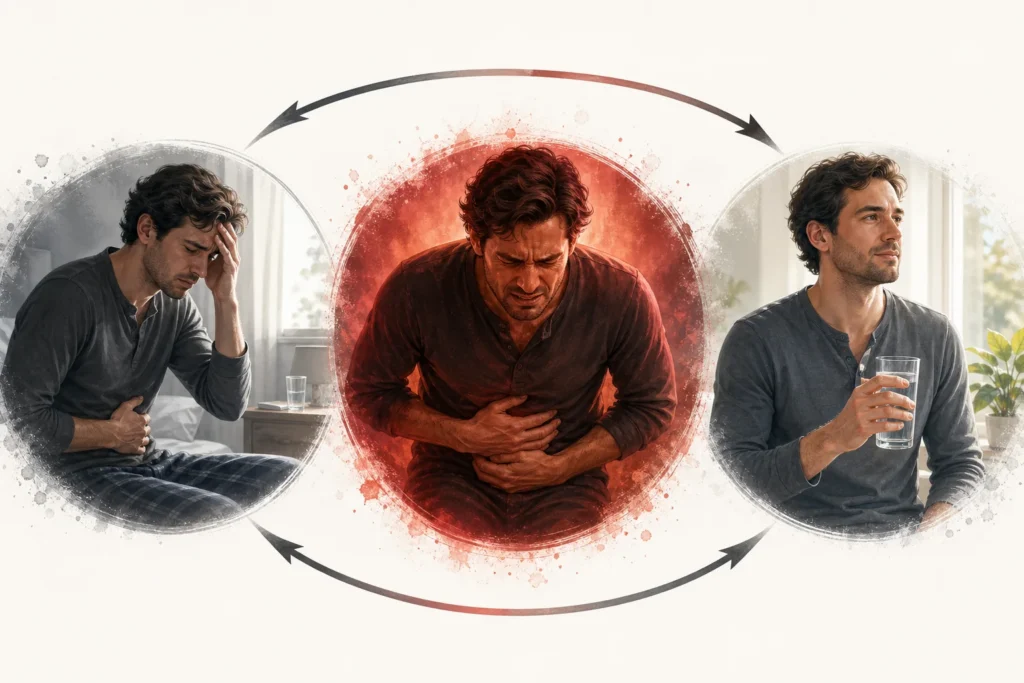
Cannabinoid hyperemesis syndrome is often described as a cycle with prodromal, hyperemetic, and recovery phases. This model can help organize a history, but it is not a home diagnostic test. People do not always move through the phases neatly, and nausea or vomiting in someone who uses cannabis can still have another cause.
The safest way to use the phase model is to document patterns, recognize escalation early, and bring the timeline to a qualified clinician. Severe or unusual symptoms should be assessed on their own merits rather than forced into a CHS stage.
The prodromal phase can be subtle
The prodromal phase may involve recurring nausea, abdominal discomfort, reduced appetite, or worry about vomiting while a person continues to use cannabis. Morning symptoms are commonly reported, but they are not specific to CHS. Pregnancy, medication effects, reflux, migraine-related disorders, infection, and other gastrointestinal conditions can produce overlapping symptoms.
A useful record includes the time symptoms start, cannabis frequency and product type, meals, medicines, hot-water behavior, symptom-free intervals, and what happens during complete abstinence. A short improvement after a shower or a single day without cannabis does not establish the diagnosis.
The hyperemetic phase carries dehydration risk
The hyperemetic phase refers to intense, repeated vomiting and may include abdominal pain, inability to eat or drink, and frequent hot bathing. Repeated losses can lead to dehydration, electrolyte abnormalities, kidney injury, falls, burns, or complications from forceful vomiting. Home comfort measures do not correct these risks.
Seek urgent medical care when fluids will not stay down, urine becomes very limited or dark, or fainting, confusion, blood in vomit, chest pain, severe weakness, fever, or severe or unusual abdominal pain appears. Do not wait for a fixed number of hours when symptoms are worsening.
- Tell the care team about cannabis, CBD, delta products, concentrates, medicines, and supplements.
- Report the last time you urinated and whether any fluid has stayed down.
- Mention pregnancy possibility, fever, blood, chest pain, and unusual pain immediately.
Recovery begins with stabilization and cannabis cessation
During recovery, vomiting may stop before hydration, appetite, food tolerance, sleep, mood, and energy fully stabilize. Those timelines vary. Follow discharge instructions, return to fluids and food according to tolerance and medical advice, and arrange follow-up when symptoms persist, recur, or limit nutrition and daily function.
Complete cannabis cessation is central when CHS is suspected. A brief symptom-free interval is encouraging but does not prove sustained resolution because cyclical disorders can include well periods. Clinical follow-up across the person's usual episode pattern helps clarify whether the working diagnosis fits.
The phases are a communication tool, not a verdict
Not everyone reports hot-water relief, not every episode begins in the morning, and cannabis exposure alone does not explain every vomiting illness. The phase model is most valuable when it improves communication: what happened before the episode, how the acute illness progressed, which treatments were used, and what changed during sustained abstinence.
If the pattern changes, new warning signs appear, or symptoms continue despite abstinence, ask the clinician to reconsider other causes. A responsible CHS plan leaves room for diagnostic uncertainty while still taking cannabis cessation and severe vomiting seriously.
Continue with a focused next step
- Review the full CHS symptom pattern
- Understand the earliest possible phase
- Follow the CHS recovery checkpoints
Sources and further reading
- AGA Clinical Practice Update on CHS (2024)
- AGA: Diagnosis and management of cyclic vomiting syndrome
Selected clinical references
- AGA Clinical Practice Update on CHS diagnosis and management (2024)
- Systematic review: CHS diagnosis and treatment
- NCBI Bookshelf: CHS clinical overview
Sources are selected for the topic of this page. CHS SOS provides general education, not diagnosis or individualized medical advice, and does not describe content as medically reviewed unless that is explicitly stated.
Questions readers often ask
What is the main takeaway from “The Stages of the CHS Cycle, Explained”?
Follow the prodromal, hyperemetic, and recovery phases to see how the cycle may repeat.
How should I use CHS research when speaking with a clinician?
Use research as context for a conversation, not as a self-diagnosis. Bring a clear timeline of cannabis use, vomiting cycles, hot-water behavior, hydration problems, treatments tried, and any periods of complete abstinence.
Can topical capsaicin replace cannabis cessation or medical care?
No. Topical capsaicin is discussed as a warming comfort option, not a cure. It does not replace complete cannabis cessation, hydration assessment, emergency care when warning signs are present, or individualized advice from a qualified clinician.
What should I do next if I am still unsure?
Use the CHS Symptom Check to organize the pattern, review the CHS Action Plan, and bring your timeline to a qualified clinician. Seek urgent care now if severe vomiting or dehydration warning signs are present.
Medical disclaimer: CHS SOS provides educational information and does not diagnose or treat medical conditions. Seek advice from a qualified healthcare professional.

Leave a comment