

CHS treatment has two different jobs. Acute care stabilizes vomiting, dehydration, electrolyte problems, and other complications. Long-term management removes cannabinoid exposure and follows the symptom pattern over time. A home remedy or product should not be presented as doing both.
If repeated vomiting is happening now, begin with safety rather than trying to rank treatments. Severe symptoms can require urgent evaluation even when a previous episode was labeled CHS.
Know when home care is no longer appropriate
Seek urgent medical care when fluids will not stay down, urine output falls, or fainting, confusion, blood in vomit, chest pain, severe weakness, fever, or severe or unusual abdominal pain appears. Do not drive when faint, confused, sedated, or severely weak.
Tell the care team about cannabis, CBD, delta products, concentrates, edibles, medicines, supplements, pregnancy possibility, and other substances. Cannabis history should inform the differential diagnosis, not end it.
What acute medical care may include
Clinicians may use intravenous fluids, electrolyte replacement, laboratory monitoring, antiemetic or other selected medicines, and tests for alternative diagnoses or complications. The appropriate combination depends on the presentation, other conditions, medicines, and local protocols.
Evidence for CHS-specific medication choices remains limited. A medicine that helps one episode may not work for everyone, and prescription treatments can have significant adverse effects or interactions.
Heat and topical capsaicin have safety limits
Some people report temporary relief from hot showers or baths, possibly involving TRPV1 signaling. The response is variable and does not confirm CHS. Prolonged very hot bathing can worsen fluid loss and cause burns or falls.
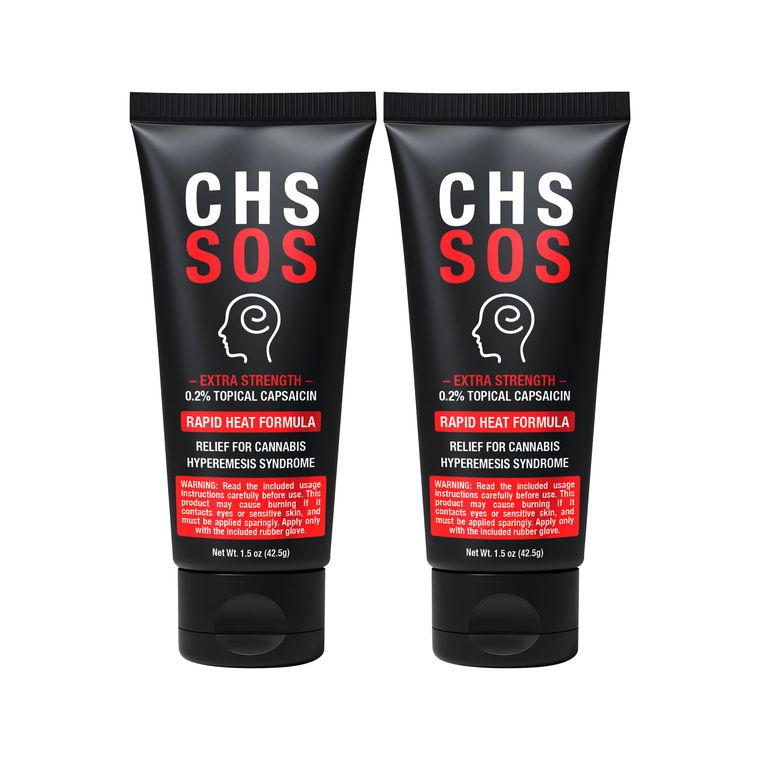
Topical capsaicin has limited evidence for temporary relief in acute care. Use only as directed on the product label, only on intact external skin, away from eyes and mucous membranes, and never under direct heat. Stop and seek advice for a severe skin reaction. It is not a cure or a replacement for medical care.
Complete cannabis cessation addresses recurrence risk
Clinical guidance emphasizes complete cessation of cannabis and cannabinoid products when CHS is suspected. Switching to CBD, edibles, concentrates, or occasional use can leave exposure and diagnostic uncertainty in place. A short tolerance break is not the same as sustained abstinence.
Do not deliberately restart cannabis to see whether symptoms return. Arrange follow-up across the person's usual episode pattern and ask for help with cravings, withdrawal, sleep, pain, appetite, or the condition for which cannabis was being used.
Use discharge to build the next plan
Before leaving care, confirm hydration and food instructions, medication directions, skin precautions, return warnings, and who will review follow-up tests. Track vomiting, fluids, urine output, food tolerance, cannabis abstinence, and any symptom recurrence.
Recovery timelines vary. Return for assessment when symptoms persist, worsen, recur, or change rather than assuming that the diagnosis or a treatment response has already been proven.
Continue with a focused next step
- Review symptom-relief tools and safety limits
- Understand the hyperemetic phase
- Learn about the CHS SOS warming cream
Sources and further reading
- AGA Clinical Practice Update on CHS (2024)
- Systematic review of pharmacologic CHS treatment
- MedlinePlus topical capsaicin safety
Selected clinical references
- AGA Clinical Practice Update on CHS diagnosis and management (2024)
- NIDDK: Treatment and dehydration care for cyclic vomiting
- MedlinePlus: Topical capsaicin use and safety precautions
Sources are selected for the topic of this page. CHS SOS provides general education, not diagnosis or individualized medical advice, and does not describe content as medically reviewed unless that is explicitly stated.
Questions readers often ask
What is the main takeaway from “How to Treat CHS: First Steps”?
Understand the first steps in suspected CHS: urgent assessment, hydration, clinician-directed acute care, capsaicin safety, and complete cannabis cessation.
When do nausea or vomiting symptoms need urgent medical care?
Seek urgent care if you cannot keep fluids down, have very little or very dark urine, feel faint or confused, have blood in vomit, chest pain, or severe or unusual pain. Online information should not delay emergency evaluation.
Can topical capsaicin replace cannabis cessation or medical care?
No. Topical capsaicin is discussed as a warming comfort option, not a cure. It does not replace complete cannabis cessation, hydration assessment, emergency care when warning signs are present, or individualized advice from a qualified clinician.
What should I do next if I am still unsure?
Use the CHS Symptom Check to organize the pattern, review the CHS Action Plan, and bring your timeline to a qualified clinician. Seek urgent care now if severe vomiting or dehydration warning signs are present.
Medical disclaimer: CHS SOS provides educational information and does not diagnose or treat medical conditions. Seek advice from a qualified healthcare professional.


Leave a comment