

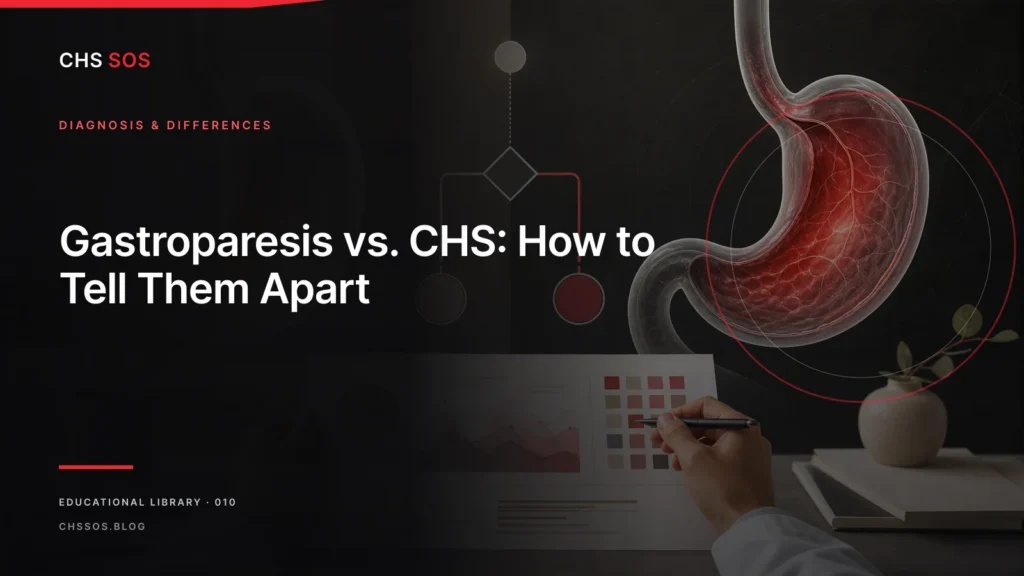
Gastroparesis and cannabinoid hyperemesis syndrome can both involve nausea, vomiting, early fullness, and difficulty eating. Similar symptoms do not mean the conditions have the same cause or treatment, and neither can be confirmed from a symptom list alone.
Gastroparesis means the stomach empties more slowly than expected without a mechanical blockage. CHS is a clinical syndrome associated with prolonged cannabis exposure and recurrent symptom cycles. A careful history and appropriate testing are needed because other conditions can resemble either one.
Patterns that may point in different directions
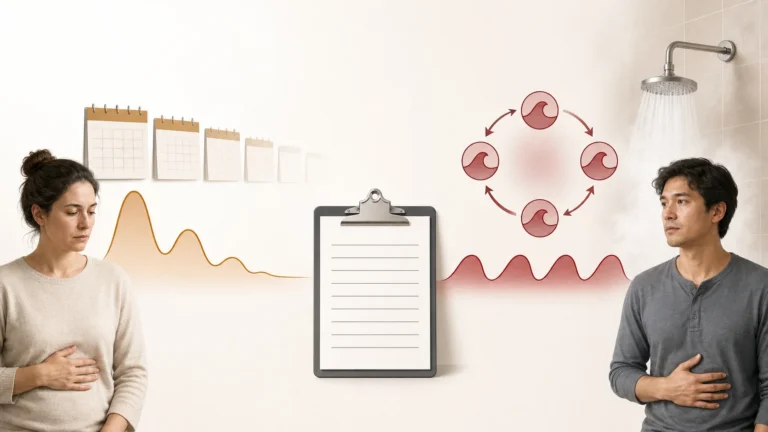
Gastroparesis often produces symptoms after eating, including early satiety, prolonged fullness, bloating, nausea, and vomiting. Diabetes, certain medicines, prior surgery, and other conditions can affect gastric emptying. CHS more often appears as recurring episodes in someone with substantial cannabis exposure, sometimes with a prodromal period and temporary relief from hot bathing.
Hot-water behavior is a clue, not proof. Likewise, cannabis exposure does not automatically make every vomiting episode CHS. The response to a sustained period of complete cannabis abstinence can be important evidence, but improvement may take time and should be interpreted with a clinician.
How clinicians investigate the difference
A clinician may review medicines and medical history, check hydration and nutrition, order laboratory or imaging tests, and rule out obstruction or other urgent causes. Gastroparesis evaluation can include a standardized gastric-emptying test. CHS has no single confirmatory blood test or scan; diagnosis relies on the overall pattern and exclusion of alternatives.
- Bring a list of medicines, supplements, and cannabis products.
- Record whether symptoms follow meals or occur in distinct cycles.
- Document any period of complete abstinence and how symptoms changed.
Do not delay care during severe symptoms
Repeated vomiting can cause dehydration and electrolyte problems regardless of the diagnosis. Seek urgent evaluation if you cannot keep fluids down, urinate very little, faint, become confused, see blood in vomit, or develop severe or unusual pain.
Build a comparison from timing, not assumptions
The order of events is often more informative than any single symptom. Record whether nausea begins before eating, soon after a meal, or in distinct attacks; whether vomiting contains food eaten many hours earlier; and whether you return to a normal baseline between episodes. Also note diabetes, prior abdominal surgery, medicines that can slow digestion, and migraine history.
For possible CHS, document the frequency and duration of cannabis exposure, hot bathing, previous attempts to stop, and what happened during sustained abstinence. Cannabis use by itself does not prove CHS, and temporary relief from a shower does not rule out another disorder.
- Meal-linked fullness and delayed emptying need a different workup from recurrent episode cycles.
- Normal days between attacks can be clinically important and should be recorded.
- Do not restart cannabis simply to test whether symptoms return.
Questions to bring to the appointment
Ask which urgent causes have been excluded, whether any medicine could affect stomach emptying, and whether testing should occur during or between episodes. A gastric-emptying study answers a specific motility question; it is not a general test for every cause of vomiting. CHS likewise has no single scan or blood result that confirms the diagnosis.
If both labels have appeared in your chart, ask the clinician to explain the evidence for each one and the next step that would meaningfully distinguish them. A written plan should cover hydration warning signs, nutrition support when needed, cannabis cessation, and follow-up rather than leaving you with two competing labels and no action.
Continue with a focused next step
- Understand the recurring CHS symptom pattern
- Compare cyclic vomiting syndrome and CHS
- Organize your history before a medical visit
Sources and further reading
Selected clinical references
- AGA Clinical Practice Update on CHS diagnosis and management (2024)
- NIDDK: How cyclic vomiting syndrome is diagnosed
- NIDDK: How gastroparesis is diagnosed
Sources are selected for the topic of this page. CHS SOS provides general education, not diagnosis or individualized medical advice, and does not describe content as medically reviewed unless that is explicitly stated.
Questions readers often ask
What is the main takeaway from “Gastroparesis vs. CHS: How to Tell Them Apart”?
Gastroparesis and CHS can both cause nausea and vomiting, but their patterns and clinical tests differ. See what to track before an evaluation.
Can this information confirm a CHS diagnosis?
No. CHS overlaps with several gastrointestinal and medical conditions. A qualified clinician must evaluate the complete symptom pattern, cannabis exposure, examination findings, and other possible causes.
Can topical capsaicin replace cannabis cessation or medical care?
No. Topical capsaicin is discussed as a warming comfort option, not a cure. It does not replace complete cannabis cessation, hydration assessment, emergency care when warning signs are present, or individualized advice from a qualified clinician.
What should I do next if I am still unsure?
Use the CHS Symptom Check to organize the pattern, review the CHS Action Plan, and bring your timeline to a qualified clinician. Seek urgent care now if severe vomiting or dehydration warning signs are present.
Medical disclaimer: CHS SOS provides educational information and does not diagnose or treat medical conditions. Seek advice from a qualified healthcare professional.
Leave a comment