
CBD is widely marketed for nausea, but marketing claims are not the same as evidence for a specific condition. For someone with suspected cannabinoid hyperemesis syndrome, using CBD to manage nausea is especially uncertain because CHS is associated with cannabinoid exposure and the long-term composition of many commercial products is difficult to verify.
CBD should not be treated as a proven substitute for medical evaluation, hydration assessment, or complete cannabis cessation. Products labeled CBD may contain other cannabinoids, including THC, and concentrations may not always match the label.
Why suspected CHS changes the question
The relevant question is not simply whether a cannabinoid can influence nausea pathways. It is whether continued cannabinoid exposure is safe or useful for a person whose vomiting pattern may be related to cannabis. Current CHS guidance focuses on recognizing the pattern, treating acute complications, and stopping cannabis rather than switching from THC to CBD.
A brief improvement after taking a product does not confirm that it is treating the underlying cause. Symptoms can fluctuate within a cycle, and short-term relief can make it harder to understand what is driving recurrence.
A safer way to respond to nausea
Tell a clinician about all cannabis and CBD products, including edibles, vapes, concentrates, and topical or oral products. Ask about other possible causes of nausea and which treatments are appropriate for your medical history. If CHS is suspected, discuss a complete abstinence plan and how long the symptom pattern should be monitored.
- Do not rely on CBD to keep fluids down during persistent vomiting.
- Avoid combining products without checking for medicine interactions.
- Seek urgent care for fainting, confusion, blood in vomit, very little urine, chest pain, or severe pain.
What to record before an appointment
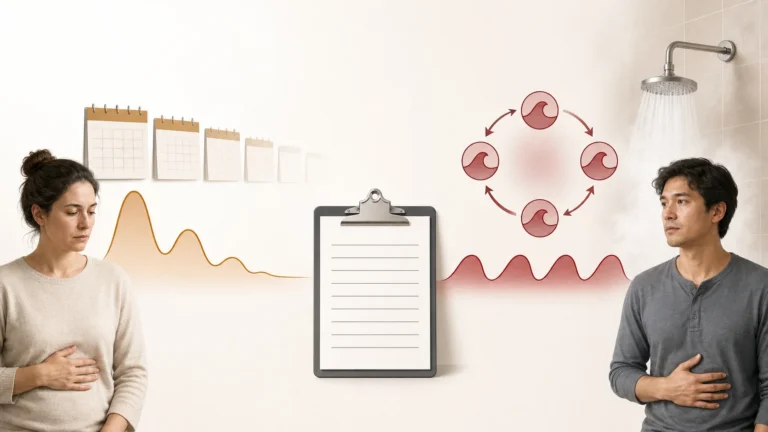
Write down the timing of nausea, all cannabinoid products used, whether hot bathing changes symptoms, and what happens during complete abstinence. That timeline is more useful than trying another product and guessing from the immediate response.
Why a product label does not settle the safety question
A bottle labeled CBD can differ from another bottle in dose, formulation, route, and the presence of other cannabinoids. Nonprescription products have not all been evaluated for purity, consistent concentration, interactions, or effectiveness for nausea. The FDA also warns that unapproved CBD products may carry unproven medical claims and can interact with medicines.
For suspected CHS, this uncertainty matters because switching cannabinoid products can prolong exposure while the vomiting pattern remains unexplained. Topical CBD, oral CBD, full-spectrum products, and THC-containing products are not interchangeable, so include the exact label and route when you speak with a clinician.
- Photograph the ingredient panel and record the amount and time used.
- List prescription medicines, supplements, alcohol, and other substances.
- Do not assume that hemp-derived or non-intoxicating means risk-free.
Use an abstinence period as clinical information
When a clinician suspects CHS, complete cannabis cessation is more informative than alternating among THC, CBD, vapes, and edibles. The goal is not to provoke symptoms or promise a fixed recovery date; it is to remove ongoing cannabinoid exposure while other causes are assessed and the symptom pattern is monitored.
If nausea is severe enough that fluids will not stay down, product experimentation is not a safe substitute for care. Seek urgent evaluation for dehydration, fainting, confusion, blood in vomit, chest pain, severe or unusual abdominal pain, or rapidly worsening symptoms.
Continue with a focused next step
- Learn what may contribute to CHS
- Review treatment and urgent-care guidance
- Plan for complete cannabis cessation
Sources and further reading
- AGA Clinical Practice Update on CHS (2024)
- FDA consumer information about cannabis and cannabis-derived products
Selected clinical references
- AGA Clinical Practice Update on CHS diagnosis and management (2024)
- NIDDK: Treatment and dehydration care for cyclic vomiting
- MedlinePlus: Topical capsaicin use and safety precautions
Sources are selected for the topic of this page. CHS SOS provides general education, not diagnosis or individualized medical advice, and does not describe content as medically reviewed unless that is explicitly stated.
Questions readers often ask
What is the main takeaway from “CBD for Nausea: Why Suspected CHS Needs Caution”?
CBD is not an established treatment for suspected CHS. Learn why adding another cannabinoid may obscure the pattern and when nausea needs medical care.
When do nausea or vomiting symptoms need urgent medical care?
Seek urgent care if you cannot keep fluids down, have very little or very dark urine, feel faint or confused, have blood in vomit, chest pain, or severe or unusual pain. Online information should not delay emergency evaluation.
What should I do next if I am still unsure?
Use the CHS Symptom Check to organize the pattern, review the CHS Action Plan, and bring your timeline to a qualified clinician. Seek urgent care now if severe vomiting or dehydration warning signs are present.
Medical disclaimer: CHS SOS provides educational information and does not diagnose or treat medical conditions. Seek advice from a qualified healthcare professional.
Leave a comment