

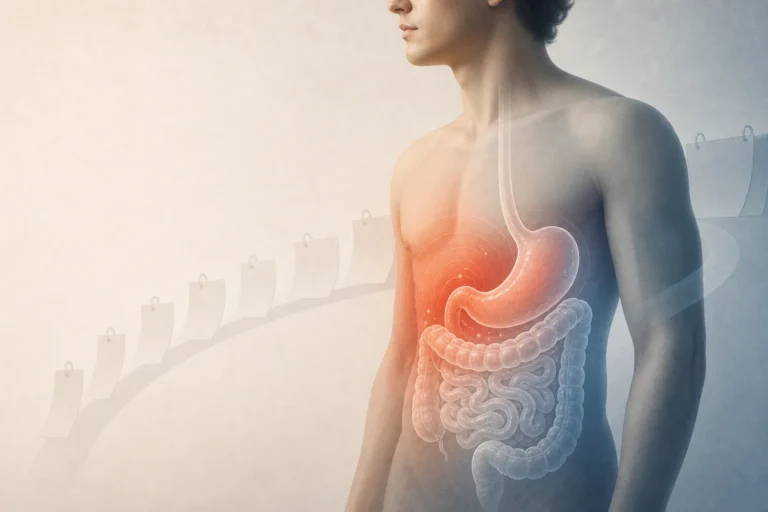
Cannabinoid hyperemesis syndrome, usually shortened to CHS, is a recurring nausea and vomiting disorder associated with prolonged, frequent cannabis exposure. It can become medically serious because repeated vomiting may cause dehydration, electrolyte abnormalities, kidney injury, and complications from forceful vomiting.
CHS is a clinical diagnosis. There is no single blood test, scan, hot-shower response, cannabis-use threshold, or online quiz that confirms it.
The pattern is cyclical rather than one bad reaction
Clinicians look for stereotyped episodes of nausea and vomiting, often separated by periods of improvement, in the context of substantial cannabis exposure. Abdominal pain and temporary relief with hot bathing are commonly reported but are not required and are not unique to CHS.
A single episode immediately after taking too much cannabis may be intoxication or poisoning rather than CHS. Conversely, recurring vomiting can have many non-cannabis causes. The timeline and follow-up matter.
CHS is often described in three phases
A possible prodromal phase may involve recurring nausea or abdominal discomfort before severe vomiting develops. The hyperemetic phase involves repeated vomiting and carries dehydration risk. During recovery, vomiting, hydration, appetite, sleep, mood, and daily function may improve on different schedules.
People do not always move through these phases neatly. The model helps organize a history; it does not diagnose an individual or make a new symptom harmless.
Clinicians compare CHS with other causes
Evaluation may consider cyclic vomiting syndrome, infection, pregnancy-related vomiting, medication effects, obstruction, pancreatitis, gastroparesis, metabolic illness, and other gastrointestinal or neurologic conditions. Tests are selected to assess severity and alternatives, not to produce one universal CHS result.
Sustained improvement during complete cannabis abstinence is important evidence. A short break, temporary well period, or return of symptoms after one product change is harder to interpret.
Urgent warning signs come before diagnosis
Seek urgent care when fluids will not stay down, urine becomes very limited or dark, or fainting, confusion, blood in vomit, chest pain, severe weakness, fever, or severe or unusual pain appears. Prolonged hot bathing can worsen fluid loss and should not delay care.
Bring the cannabis, medicine, and episode timeline. Include product types, frequency, the last use, pregnancy possibility, and what happened during complete abstinence.
Long-term management centers on cessation and follow-up
Acute care may stabilize symptoms and complications, but clinical guidance centers on complete cannabis cessation for long-term management. CBD, edibles, concentrates, occasional use, and delta products do not provide a proven safe exception.
Support for withdrawal, cravings, sleep, pain, appetite, or mental health can make cessation more realistic. Persistent or recurring symptoms should be reassessed rather than automatically attributed to CHS.
Continue with a focused next step
- Review the full CHS symptom pattern
- Explore what may cause CHS
- Understand the stages of the CHS cycle
Sources and further reading
- AGA Clinical Practice Update on CHS (2024)
- Original CHS case series in Gut (2004)
- AGA guidance on cyclic vomiting syndrome
Selected clinical references
- AGA Clinical Practice Update on CHS diagnosis and management (2024)
- NIDDK: How cyclic vomiting syndrome is diagnosed
- NIDDK: How gastroparesis is diagnosed
Sources are selected for the topic of this page. CHS SOS provides general education, not diagnosis or individualized medical advice, and does not describe content as medically reviewed unless that is explicitly stated.
Questions readers often ask
What is the main takeaway from “What Is CHS? Symptoms, Causes, and Diagnosis”?
Compare the recurring CHS pattern and understand why a clinician must rule out other causes.
Can this information confirm a CHS diagnosis?
No. CHS overlaps with several gastrointestinal and medical conditions. A qualified clinician must evaluate the complete symptom pattern, cannabis exposure, examination findings, and other possible causes.
Can topical capsaicin replace cannabis cessation or medical care?
No. Topical capsaicin is discussed as a warming comfort option, not a cure. It does not replace complete cannabis cessation, hydration assessment, emergency care when warning signs are present, or individualized advice from a qualified clinician.
What should I do next if I am still unsure?
Use the CHS Symptom Check to organize the pattern, review the CHS Action Plan, and bring your timeline to a qualified clinician. Seek urgent care now if severe vomiting or dehydration warning signs are present.
Medical disclaimer: CHS SOS provides educational information and does not diagnose or treat medical conditions. Seek advice from a qualified healthcare professional.

Leave a comment