

Cannabis use disorder describes a continuing pattern of use that causes impairment or distress. It is not diagnosed simply because someone uses cannabis daily, has a high tolerance, or has experienced CHS. A qualified professional evaluates the full pattern over time.
CHS and cannabis use disorder are different diagnoses, but they can overlap. Continuing to use after repeated vomiting episodes, struggling to stop despite intending to, or repeatedly returning to use after recovery may be important parts of the clinical conversation.
Patterns clinicians ask about
An evaluation may explore loss of control, unsuccessful efforts to cut down, time spent obtaining or recovering from cannabis, cravings, neglected responsibilities, relationship problems, hazardous use, tolerance, and withdrawal. The number, duration, and impact of symptoms help determine whether a disorder is present and how severe it may be.
- Using more or longer than intended.
- Repeatedly trying to stop without being able to maintain the change.
- Giving up important activities or continuing despite clear harm.
- Needing support to manage cravings, sleep, mood, or withdrawal.
Withdrawal symptoms versus returning CHS
Irritability, sleep disturbance, appetite change, anxiety, and cravings can occur after stopping regular cannabis. Nausea can occur during withdrawal, but repeated severe vomiting, dehydration, hot-water behavior, and a history of cyclical episodes require medical evaluation for CHS and other causes. Do not assume that restarting cannabis is the safe solution to nausea after stopping.
Prepare for a nonjudgmental assessment
Bring an honest timeline of use, attempts to stop, withdrawal symptoms, CHS episodes, and effects on daily life. The purpose is to choose appropriate support, not to attach a label. Treatment can address both substance use and the conditions that made cannabis feel necessary.
Look for a pattern of impact, not a stereotype
Cannabis use disorder is not defined by appearance, employment status, or whether cannabis is legal. Clinicians look for a cluster of changes such as loss of control, unsuccessful efforts to cut down, craving, time spent obtaining or recovering from use, role problems, risky use, continued use despite harm, tolerance, and withdrawal.
One item does not establish the diagnosis, and frequency alone does not tell the whole story. The useful question is how cannabis is affecting health, obligations, relationships, safety, and the ability to follow through on a decision to stop, especially after a CHS episode.
- Record concrete examples rather than judging yourself with labels.
- Include high-potency products, edibles, vapes, and concentrates.
- Note what happened during previous attempts to reduce or stop.
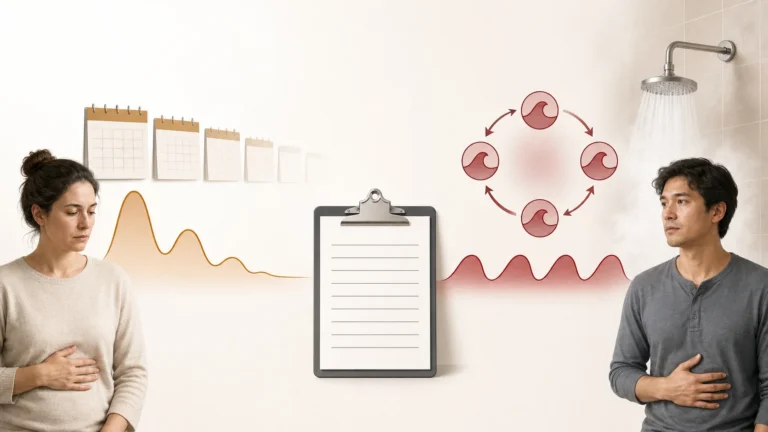
Keep withdrawal and recurrent CHS on separate timelines
Irritability, craving, sleep difficulty, anxiety, appetite change, and vivid dreams may occur after stopping regular cannabis. Repeated severe vomiting, dehydration, and hot-water behavior require a separate medical assessment. Assuming every post-cessation symptom is withdrawal can delay care; assuming every symptom is CHS can also miss another condition.
Bring both timelines to the same clinician or treatment team. That makes it possible to support abstinence while also addressing urgent medical needs, mood, sleep, pain, and relapse risk. Immediate danger, suicidal thoughts, psychosis, severe dehydration, or inability to stay safe requires urgent help rather than a routine screening appointment.
Continue with a focused next step
- Learn how cannabis use disorder is assessed
- Review treatment and support options
- Compare withdrawal symptoms with CHS
Sources and further reading
Selected clinical references
- AGA Clinical Practice Update on CHS diagnosis and management (2024)
- National Institute on Drug Abuse: Cannabis and cannabis use disorder
- SAMHSA: Confidential treatment referral and support
Sources are selected for the topic of this page. CHS SOS provides general education, not diagnosis or individualized medical advice, and does not describe content as medically reviewed unless that is explicitly stated.
Questions readers often ask
What is the main takeaway from “Cannabis Use Disorder Symptoms During CHS Recovery”?
Cannabis use disorder is defined by loss of control and consequences, not by a single amount of use. See how its symptoms can overlap with CHS recovery.
What is the most important step in preventing CHS from returning?
Complete cannabis cessation is the key step associated with preventing CHS recurrence. Recovery timing differs between people, and support from a qualified clinician or substance-use professional can make the adjustment safer and more manageable.
What should I do next if I am still unsure?
Use the CHS Symptom Check to organize the pattern, review the CHS Action Plan, and bring your timeline to a qualified clinician. Seek urgent care now if severe vomiting or dehydration warning signs are present.
Medical disclaimer: CHS SOS provides educational information and does not diagnose or treat medical conditions. Seek advice from a qualified healthcare professional.
Leave a comment