



People often ask whether CHS can begin before vomiting. Clinical descriptions include a possible prodromal phase with recurring nausea, abdominal discomfort, appetite changes, or fear of vomiting while cannabis use continues. That is different from saying that any cyclical nausea in a cannabis user is confirmed CHS.
Current diagnostic guidance emphasizes a stereotyped vomiting pattern and sustained resolution during cannabis abstinence. Without prominent vomiting, clinicians need to keep a broad differential diagnosis and use careful follow-up.
Prodromal symptoms are possible but nonspecific
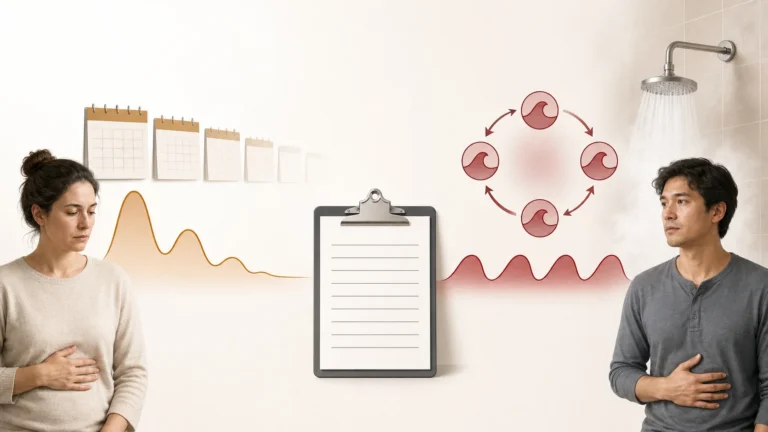
Morning nausea, abdominal discomfort, reduced appetite, retching, and temporary comfort from hot water are reported before or between severe episodes. Similar symptoms can occur with pregnancy, reflux, medicines, migraine-related disorders, anxiety, infection, metabolic illness, gastroparesis, and many other conditions.
Hot-water relief can occur in cyclic vomiting syndrome and is not a unique receptor test. Normal imaging or laboratory results also do not turn a nonspecific symptom pattern into CHS.
Document the pattern without self-diagnosing
Record when nausea begins, how long it lasts, food and fluid tolerance, pain, bowel changes, headaches, fever, medicines, pregnancy possibility, hot-water behavior, and symptom-free intervals. Add cannabis frequency, product types, potency when known, the last use, and what happened during complete abstinence.
The record should help a clinician decide what to evaluate. It should not be used to wait for vomiting or to dismiss a changing symptom as an expected phase.
Complete abstinence gives clearer evidence than a product switch
When CHS is a reasonable concern, clinical guidance centers on complete cannabis cessation and follow-up. CBD, edibles, concentrates, delta products, microdosing, and weekend use do not provide a validated way to test or prevent CHS.
Do not restart cannabis to see whether nausea returns. A cyclical condition can include a temporary well period, so interpretation should continue across the person's usual pattern.
Know when nausea needs prompt care
Seek medical assessment when nausea persists, worsens, causes weight loss, prevents adequate intake, or changes from the usual pattern. Repeated vomiting, inability to keep fluids down, limited or dark urine, fainting, confusion, blood, chest pain, severe weakness, fever, or severe pain requires urgent evaluation.
Early recognition is valuable when it creates a safer plan and earlier clinical conversation. It is harmful when it creates false certainty or delays another diagnosis.
Continue with a focused next step
- Understand the possible prodromal phase
- Compare CHS with everyday nausea
- Use the private CHS symptom check
Sources and further reading
- AGA Clinical Practice Update on CHS (2024)
- AGA guidance on cyclic vomiting syndrome
- NIDDK: Diagnosis of cyclic vomiting syndrome
Selected clinical references
- AGA Clinical Practice Update on CHS diagnosis and management (2024)
- NIDDK: Treatment and dehydration care for cyclic vomiting
- MedlinePlus: Topical capsaicin use and safety precautions
Sources are selected for the topic of this page. CHS SOS provides general education, not diagnosis or individualized medical advice, and does not describe content as medically reviewed unless that is explicitly stated.
Questions readers often ask
What is the main takeaway from “Can CHS Start Without Vomiting? Understanding the Prodromal Phase”?
Recurring nausea may precede a CHS vomiting episode, but nausea without vomiting is nonspecific and cannot establish CHS by itself.
When do nausea or vomiting symptoms need urgent medical care?
Seek urgent care if you cannot keep fluids down, have very little or very dark urine, feel faint or confused, have blood in vomit, chest pain, or severe or unusual pain. Online information should not delay emergency evaluation.
What should I do next if I am still unsure?
Use the CHS Symptom Check to organize the pattern, review the CHS Action Plan, and bring your timeline to a qualified clinician. Seek urgent care now if severe vomiting or dehydration warning signs are present.
Medical disclaimer: CHS SOS provides educational information and does not diagnose or treat medical conditions. Seek advice from a qualified healthcare professional.

Leave a comment