


Nausea is a common symptom with many possible causes. CHS becomes a consideration when nausea is part of a recurring vomiting pattern in someone with prolonged, frequent cannabis exposure, but the history still needs to be compared with other gastrointestinal, neurologic, metabolic, medication-related, infectious, and pregnancy-related causes.
The goal of a comparison is to improve the questions asked in care, not to produce a home diagnosis.
Compare the episode pattern
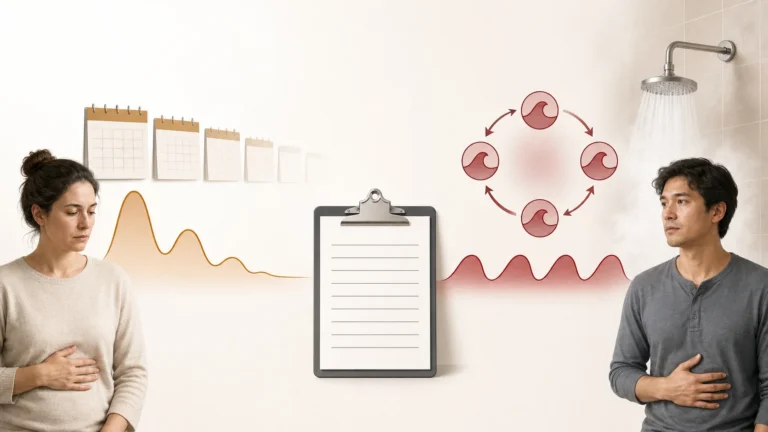
Ask whether nausea is isolated, continuous, linked to meals or medicines, or part of stereotyped vomiting episodes separated by periods of improvement. CHS and cyclic vomiting syndrome can both have cyclical patterns, while other disorders may produce persistent or differently triggered symptoms.
People with CHS do not necessarily feel completely normal between every episode, and chronic nausea does not automatically rule it out. The pattern is evidence to interpret, not a rigid template.
Treat hot-water relief as a clue with limits
Some people with CHS report temporary relief during hot bathing, but the response is not required and is also reported in other vomiting disorders. It does not confirm a TRPV1 mechanism in an individual or exclude anxiety, cyclic vomiting syndrome, or another cause.
Very hot or prolonged bathing can add dehydration, burns, and falls. Temporary comfort should not override worsening symptoms or urgent warning signs.
Review cannabis exposure precisely
Document frequency, duration, product types, routes, potency when known, concentrates, edibles, CBD or delta products, and the last use. Substantial exposure supports consideration of CHS but does not make it the only possible cause.
Sustained improvement during complete cannabis abstinence is clinically important. A brief tolerance break, product switch, or one symptom-free week is harder to interpret, and deliberate re-exposure is not recommended as a test.
Use tests to evaluate severity and alternatives
There is no single CHS blood test or scan. Laboratory tests, pregnancy testing, imaging, gastric-emptying studies, or other investigations may be selected based on the presentation. Normal results do not confirm CHS; they answer the specific questions those tests were designed to address.
Ask the clinician which diagnoses are being considered, what each test can show, and what follow-up would support or challenge the working diagnosis.
Urgent symptoms do not wait for the comparison
Seek urgent care when fluids will not stay down, urine becomes very limited or dark, or fainting, confusion, blood in vomit, chest pain, severe weakness, fever, or severe or unusual abdominal pain appears. A familiar episode can still develop serious complications or have a different cause.
Bring the episode, medicine, and cannabis timeline to care. Clear information is more useful than trying to decide between CHS and 'normal nausea' alone.
Continue with a focused next step
- Compare gastroparesis and CHS
- Compare cyclic vomiting syndrome and CHS
- Use the private CHS symptom check
Sources and further reading
- AGA Clinical Practice Update on CHS (2024)
- NIDDK: Diagnosis of cyclic vomiting syndrome
- NIDDK dehydration warning signs
Selected clinical references
- AGA Clinical Practice Update on CHS diagnosis and management (2024)
- NIDDK: Treatment and dehydration care for cyclic vomiting
- MedlinePlus: Topical capsaicin use and safety precautions
Sources are selected for the topic of this page. CHS SOS provides general education, not diagnosis or individualized medical advice, and does not describe content as medically reviewed unless that is explicitly stated.
Questions readers often ask
What is the main takeaway from “CHS vs. Everyday Nausea: Patterns That Need Evaluation”?
CHS cannot be separated from everyday nausea by one symptom. Compare recurrence, exposure, abstinence response, and warning signs with a clinician.
When do nausea or vomiting symptoms need urgent medical care?
Seek urgent care if you cannot keep fluids down, have very little or very dark urine, feel faint or confused, have blood in vomit, chest pain, or severe or unusual pain. Online information should not delay emergency evaluation.
What should I do next if I am still unsure?
Use the CHS Symptom Check to organize the pattern, review the CHS Action Plan, and bring your timeline to a qualified clinician. Seek urgent care now if severe vomiting or dehydration warning signs are present.
Medical disclaimer: CHS SOS provides educational information and does not diagnose or treat medical conditions. Seek advice from a qualified healthcare professional.

Leave a comment