
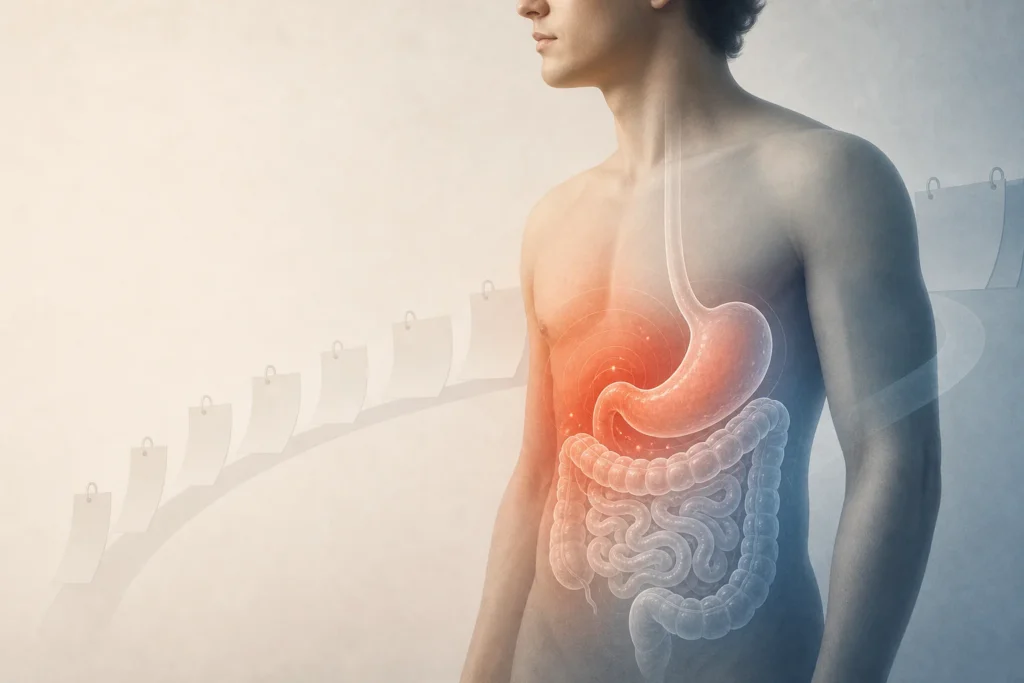
Recovery is a sequence of priorities, not a guaranteed countdown.
Move through the phases to see what to monitor after cannabis cessation and when symptoms deserve another evaluation.
Vomiting control, hydration, and ruling out danger come before a timeline estimate.
Severe vomiting, dehydration, fainting, confusion, blood in vomit, chest pain, or unusual pain require medical care. Stopping cannabis is essential but does not replace acute assessment.
- Follow medical discharge instructions.
- Record medicines and response.
- Do not resume cannabis to test whether symptoms return.
Hydration, appetite, sleep, and nausea may recover at different speeds.
A difficult day does not necessarily mean recovery has failed. Track whether the overall pattern is improving and whether fluids, food, rest, and daily function are returning.
- Urine output and dizziness.
- Nausea, appetite, and bowel changes.
- Sleep, mood, and withdrawal symptoms.
Sustained complete abstinence gives the symptom timeline meaning.
Improvement during abstinence supports suspected CHS over time. Persistent, worsening, or atypical symptoms need reassessment for other conditions.
- Keep the last-use date visible.
- Bring the timeline to follow-up.
- Ask what alternative diagnoses remain possible.
Recovery planning includes support for staying cannabis-free.
Sleep, mood, craving, routines, and social context can affect cessation. Professional or peer support may help; needing support is not a failure.
- Identify high-risk situations.
- Plan what to do if cravings rise.
- Keep urgent warning signs available.
CHS is not best described with a simple permanent-or-temporary answer. The recurring vomiting syndrome is expected to resolve during sustained cannabis cessation when the diagnosis is correct, but acute complications, withdrawal, digestive recovery, and diagnostic confirmation can unfold on different schedules.
Symptoms that persist or change despite abstinence should be reassessed rather than assumed to be permanent CHS damage or a normal detox process.
The recurring cycle is tied to continued exposure
Clinical guidance centers on complete cannabis cessation for long-term management. Reducing use, switching products, or taking a short break can leave cannabinoid exposure and diagnostic uncertainty in place. Recurrence after renewed exposure is described in published reports.
Do not restart cannabis to test whether CHS is gone. A new episode may bring dehydration or other complications and does not provide a controlled diagnostic experiment.
Recovery includes several different processes
Vomiting may settle before fluids, electrolytes, appetite, food tolerance, sleep, mood, energy, and concentration normalize. Cannabis withdrawal can add craving, irritability, restlessness, low mood, reduced appetite, vivid dreams, or headache.
There is no universal date by which every symptom should disappear. Track the direction of change and arrange follow-up when progress stalls or daily function remains limited.
Acute complications need their own follow-up
Dehydration, electrolyte abnormalities, kidney injury, weight loss, burns from hot bathing, or injury from forceful vomiting may require monitoring after the vomiting episode ends. A symptom-free stomach does not prove that laboratory or nutritional problems have resolved.
Follow discharge instructions and confirm who will review tests, medicines, hydration, and nutrition. Return urgently for recurring vomiting, limited urine, fainting, confusion, blood, chest pain, severe weakness, or severe pain.
Sustained abstinence also tests the diagnosis
A cyclical disorder can include well periods even without effective treatment. Clinicians therefore look for sustained resolution during complete abstinence across the person's usual episode pattern rather than one good week.
If symptoms continue or recur despite abstinence, ask whether cyclic vomiting syndrome, gastroparesis, medicines, pregnancy-related illness, metabolic disease, or another condition needs further evaluation.
Long-term recovery is supported, not guaranteed
A practical long-term plan addresses the reasons cannabis was used, withdrawal and cravings, sleep, pain, appetite, mental health, and access to support. Primary care, gastroenterology, behavioral health, and addiction services may each have a role.
The useful message is not that CHS is permanently cured or that damage is inevitable. It is that sustained cessation, monitoring, and reassessment give the best basis for recovery and for knowing whether the diagnosis fits.
Continue with a focused next step
- Follow the CHS recovery timeline
- Build a recurrence-prevention plan
- Plan complete cannabis cessation
Sources and further reading
- AGA Clinical Practice Update on CHS (2024)
- Systematic review of CHS diagnosis and treatment
- NIDA cannabis withdrawal symptom checklist
Selected clinical references
- AGA Clinical Practice Update on CHS diagnosis and management (2024)
- National Institute on Drug Abuse: Cannabis and cannabis use disorder
- SAMHSA: Confidential treatment referral and support
Sources are selected for the topic of this page. CHS SOS provides general education, not diagnosis or individualized medical advice, and does not describe content as medically reviewed unless that is explicitly stated.
Questions readers often ask
What is the main takeaway from “Is CHS Permanent? Recovery, Relapse, and What to Expect”?
Understand what evidence says about recovery, recurrence, and sustained cannabis abstinence.
What is the most important step in preventing CHS from returning?
Complete cannabis cessation is the key step associated with preventing CHS recurrence. Recovery timing differs between people, and support from a qualified clinician or substance-use professional can make the adjustment safer and more manageable.
What should I do next if I am still unsure?
Use the CHS Symptom Check to organize the pattern, review the CHS Action Plan, and bring your timeline to a qualified clinician. Seek urgent care now if severe vomiting or dehydration warning signs are present.
Medical disclaimer: CHS SOS provides educational information and does not diagnose or treat medical conditions. Seek advice from a qualified healthcare professional.


Leave a comment