

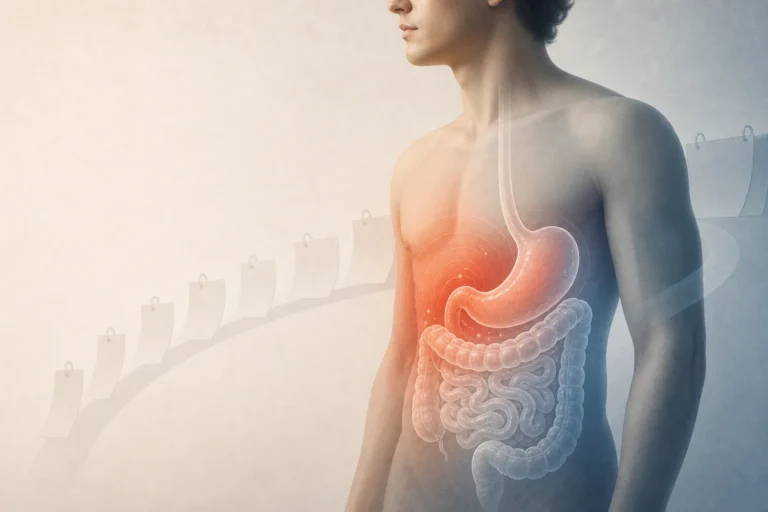
Cannabinoid hyperemesis syndrome is no longer considered an obscure diagnosis, but there is no single reliable percentage that tells us how common it is. Estimates vary because studies use different definitions, recruit people from different settings, and often depend on self-reported cannabis use.
The most useful conclusion is not a dramatic number. CHS should be considered when recurrent nausea or vomiting occurs in the setting of prolonged cannabis exposure, especially when episodes improve during complete abstinence. A clinician still needs to evaluate other possible causes.
Why prevalence estimates vary
A survey of frequent cannabis users in an emergency department cannot be applied to every person who uses cannabis. Studies may also count suspected cases rather than diagnoses confirmed over time. Some include only people with severe vomiting, while others include earlier symptoms. These differences can produce very different estimates.
CHS may be missed because patients do not always disclose cannabis use, clinicians may be unfamiliar with the pattern, and symptoms overlap with cyclic vomiting syndrome, infections, medication effects, pregnancy, and other gastrointestinal conditions. The opposite problem is also possible: vomiting in a person who uses cannabis can be labeled CHS before other causes are adequately considered.
Who appears to be at higher risk
Most clinical descriptions involve frequent, long-term cannabis exposure, but there is no dose or duration that predicts CHS with certainty. Product potency, route of use, individual biology, and patterns of exposure may matter. CBD products do not provide a proven workaround for someone with suspected CHS.
- Track frequency, product type, potency when known, and changes in use.
- Record the timing and duration of nausea or vomiting episodes.
- Note hot-water behavior and what happened during periods of complete abstinence.
How to use the research responsibly
Prevalence research can help clinicians recognize a condition that was historically overlooked, but it cannot diagnose an individual. Bring a clear timeline to a qualified clinician and seek urgent care when vomiting prevents fluid intake, urine becomes very dark or infrequent, or fainting, confusion, blood in vomit, chest pain, or severe pain occurs.
What a prevalence number can and cannot tell you
A prevalence estimate describes the group that researchers studied; it does not predict whether one reader has CHS. A figure drawn from people who use cannabis frequently and arrive at an emergency department will naturally differ from a figure drawn from a general community survey. The denominator, the exposure definition, and the diagnostic method all matter.
Older reports also used inconsistent criteria. Some classified a case from symptoms and cannabis history alone, while stronger designs looked for sustained improvement after stopping cannabis and considered competing diagnoses. That is why CHS SOS avoids presenting one percentage as a universal risk calculator.
- Check where participants were recruited and how often they used cannabis.
- Look for a stated CHS definition rather than a loose symptom label.
- Treat headlines as an invitation to read the methods, not as a diagnosis.
A more useful question for an individual reader
Instead of asking whether CHS is common in the abstract, ask whether your own pattern deserves evaluation. Repeated nausea or vomiting, substantial cannabis exposure, hot-water behavior, symptom-free intervals, and change during complete abstinence form a more useful clinical timeline than a population percentage.
Write the timeline before an appointment and include products that may be easy to overlook, such as concentrates, edibles, vapes, delta products, and oral CBD. A clinician can use that history to consider CHS while still checking for infection, pregnancy, medication effects, obstruction, metabolic problems, and other causes that may need different care.
Continue with a focused next step
- Review the complete CHS guide
- Compare the most common CHS symptoms
- Prepare a clearer conversation with a clinician
Sources and further reading
Selected clinical references
- AGA Clinical Practice Update on CHS diagnosis and management (2024)
- Systematic review: CHS diagnosis and treatment
- NCBI Bookshelf: CHS clinical overview
Sources are selected for the topic of this page. CHS SOS provides general education, not diagnosis or individualized medical advice, and does not describe content as medically reviewed unless that is explicitly stated.
Questions readers often ask
What is the main takeaway from “How Common Is CHS? What Prevalence Studies Can Tell Us”?
CHS prevalence estimates vary widely. Learn why the numbers are uncertain, who is most at risk, and how to interpret research without self-diagnosing.
How should I use CHS research when speaking with a clinician?
Use research as context for a conversation, not as a self-diagnosis. Bring a clear timeline of cannabis use, vomiting cycles, hot-water behavior, hydration problems, treatments tried, and any periods of complete abstinence.
What should I do next if I am still unsure?
Use the CHS Symptom Check to organize the pattern, review the CHS Action Plan, and bring your timeline to a qualified clinician. Seek urgent care now if severe vomiting or dehydration warning signs are present.
Medical disclaimer: CHS SOS provides educational information and does not diagnose or treat medical conditions. Seek advice from a qualified healthcare professional.


Leave a comment