
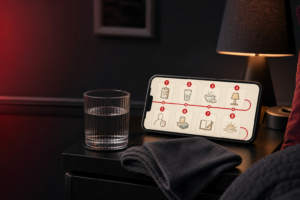

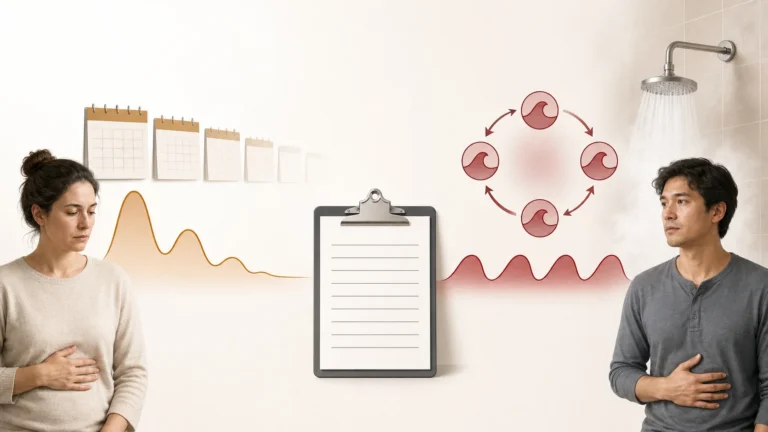
Compare the clues clinicians put on one timeline.
CVS and CHS can look similar during an episode. Tap each clue to see what it can—and cannot—tell you.
Long-term cannabis exposure makes CHS possible, not certain.
CHS occurs in the context of prolonged cannabis exposure. Cannabis use can also occur in someone who has CVS, so exposure alone cannot settle the distinction.
- Record frequency, potency, and product types.
- Include changes in use before each episode.
- A urine result does not establish the cause of vomiting.
Both conditions may include symptom-free intervals.
Episode length, timing, similarity, and return to baseline help clinicians recognize a cyclic pattern. Document the quiet periods as carefully as the worst days.
- Start and end time of each episode.
- How completely symptoms resolve.
- Whether episodes repeat in a similar way.
Migraine history and recurring triggers can support a CVS evaluation.
Clinicians may ask about migraine, stress, sleep loss, infections, menstruation, fasting, and other recurring triggers. None of these clues excludes CHS on its own.
- Personal or family migraine history.
- Sleep, stress, illness, and menstrual timing.
- What preventive plans have or have not helped.
Sustained complete abstinence helps test suspected CHS.
Improvement during sustained complete cannabis abstinence supports the CHS explanation over time. Cutting down or changing products does not answer the same question.
- Record the exact last-use date.
- Follow symptoms over weeks and longer.
- Keep clinical follow-up because other causes may coexist.
Cyclic vomiting syndrome and cannabinoid hyperemesis syndrome can look remarkably similar. Both can involve sudden episodes of intense nausea and vomiting separated by periods of improvement. The overlap is one reason an online checklist cannot settle the diagnosis.
The central difference is the relationship to cannabis. CHS occurs in the context of prolonged cannabis exposure and should improve with sustained complete abstinence. CVS can occur without cannabis exposure and may be associated with migraine biology or other triggers.
Clues that help organize the history
Clinicians look at the age symptoms began, episode timing, symptom-free intervals, migraine history, medicines, cannabis exposure, hot-water behavior, and the response to prior treatments. Hot bathing is common in CHS but is not exclusive enough to confirm it. A single positive cannabis test also does not establish the cause of vomiting.
- Write down the start and end of each episode.
- Record cannabis products, frequency, and changes in exposure.
- Note migraine history, stress, sleep loss, infections, menstruation, or other recurring triggers.
- Document what happened during a sustained period of complete abstinence.
Why stopping cannabis is diagnostically important
If CHS is suspected, complete cessation is both a central management step and useful evidence over time. Cutting down, taking a short tolerance break, or changing from THC to CBD does not provide the same information. A clinician should guide the evaluation because other urgent and treatable causes must still be considered.
Treatment is not interchangeable
CVS may involve individualized plans for prodromal symptoms, acute episodes, trigger management, and prevention between episodes. CHS care focuses on acute stabilization when needed and preventing recurrence through cannabis cessation. Severe vomiting and dehydration require medical care regardless of the label.
Create an episode diary a clinician can compare
For each episode, record the start and end time, vomiting frequency, associated pain, migraine features, fever or diarrhea, menstrual or pregnancy context when relevant, stressors, sleep disruption, and the date you returned to baseline. Add emergency visits, test results, medicines used, and whether treatment helped.
On the same timeline, record cannabis products, frequency, potency when known, changes in use, hot bathing, and any period of complete abstinence. This does not diagnose either condition, but it gives a gastroenterologist or other clinician a more reliable pattern than memory during an acute visit.
- Bring prior imaging, laboratory results, and discharge summaries when available.
- Note symptom-free intervals rather than documenting only the worst days.
- Include family or personal migraine history because it may inform CVS evaluation.
Why the distinction should change the plan
CVS management may include individualized strategies to prevent or treat episodes after other causes are evaluated. For suspected CHS, continued cannabis exposure can keep the central diagnostic question unresolved, so complete cessation and follow-up are essential parts of the assessment. A treatment that helps one episode does not by itself establish the diagnosis.
Ask what alternatives have been considered, how long the pattern will be monitored, and what counts as meaningful improvement. Seek urgent care for inability to keep fluids down, very little urine, fainting, confusion, blood in vomit, chest pain, severe or unusual pain, or rapidly worsening symptoms under either label.
Continue with a focused next step
- Review the complete CHS symptom guide
- Compare gastroparesis and CHS
- Prepare your timeline for a clinician
Sources and further reading
Selected clinical references
- AGA Clinical Practice Update on CHS diagnosis and management (2024)
- NIDDK: Treatment and dehydration care for cyclic vomiting
- MedlinePlus: Topical capsaicin use and safety precautions
Sources are selected for the topic of this page. CHS SOS provides general education, not diagnosis or individualized medical advice, and does not describe content as medically reviewed unless that is explicitly stated.
Questions readers often ask
What is the main takeaway from “Cyclic Vomiting Syndrome vs. CHS: How to Tell Them Apart”?
CVS and CHS both cause recurrent vomiting, but cannabis exposure and response to complete abstinence help clinicians distinguish the patterns.
When do nausea or vomiting symptoms need urgent medical care?
Seek urgent care if you cannot keep fluids down, have very little or very dark urine, feel faint or confused, have blood in vomit, chest pain, or severe or unusual pain. Online information should not delay emergency evaluation.
Can topical capsaicin replace cannabis cessation or medical care?
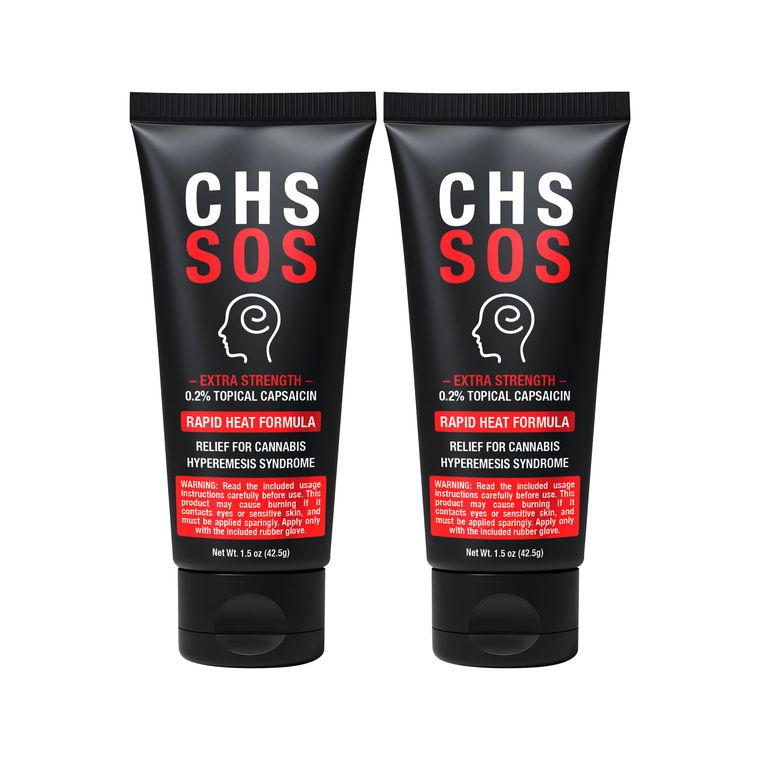
No. Topical capsaicin is discussed as a warming comfort option, not a cure. It does not replace complete cannabis cessation, hydration assessment, emergency care when warning signs are present, or individualized advice from a qualified clinician.
What should I do next if I am still unsure?
Use the CHS Symptom Check to organize the pattern, review the CHS Action Plan, and bring your timeline to a qualified clinician. Seek urgent care now if severe vomiting or dehydration warning signs are present.
Medical disclaimer: CHS SOS provides educational information and does not diagnose or treat medical conditions. Seek advice from a qualified healthcare professional.
Leave a comment