


When Was CHS Discovered? Cannabinoid Hyperemesis Syndrome
Follow CHS from its 2004 case-series description through diagnostic frameworks, clinical guidance, coding, and current prevalence research.
Read the guide
Follow CHS from its 2004 case-series description through diagnostic frameworks, clinical guidance, coding, and current prevalence research.
Read the guide
Separate established CHS findings from open questions about mechanisms, prevalence, diagnosis, and acute treatment.
Read the guide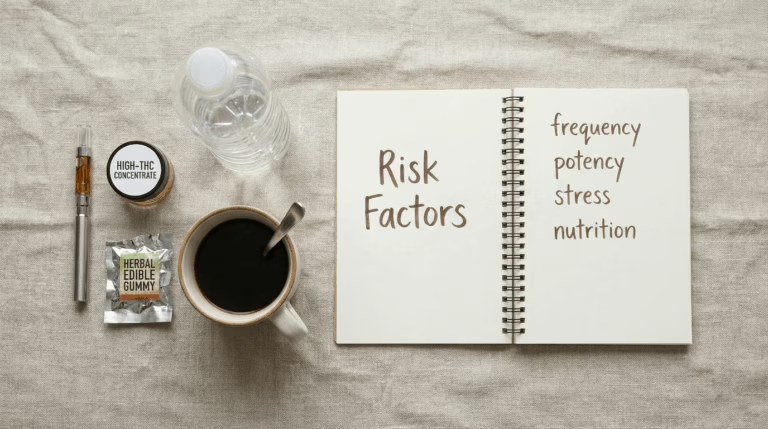
Long-term, frequent cannabinoid exposure is central to CHS risk, but no checklist can predict who will develop it or diagnose a vomiting episode.
Read the guide
Build a recurrence-prevention plan around complete cannabis cessation, follow-up care, practical routines, and support for cravings or withdrawal.
Read the guide
Find practical support for stopping cannabis, managing adjustment, and preventing recurrence.
Read the guide
See what may improve first and what can take longer after stopping cannabis.
Read the guide
Review low-risk comfort measures for mild CHS-like symptoms, the limits of heat and capsaicin, and the warning signs that require urgent care.
Read the guide
Return to fluids and food after a vomiting episode using tolerance and safety checkpoints, not a rigid CHS diet or universal timetable.
Read the guide
Prepare for daily needs and a more useful clinician conversation while symptoms are active.
Read the guide
Prepare a concise symptom, cannabis-use, medicine, and episode timeline so a clinician can evaluate CHS alongside other possible causes.
Read the guide©2026 CHS SOS